
Best Aluminum Pergola in 2026: Shade That Never Needs Painting
A pergola changes how a garden gets used, turning a patio that bakes by noon into the room everyone drifts toward. The best aluminum pergola adds that shade structure without the sanding, staining, and rot repairs that wood demands, which is why aluminum has taken over the kit market. The comparison table below lines up the main sizes and roof styles side by side so you can match the structure to your slab, your climate, and your appetite for assembly.
Buying a pergola is closer to buying a small building than a garden accessory. Footings, wind load, roof style, and permits all matter more than finish color, and mistakes are literally set in concrete. This guide walks through the structural decisions first, then the comfort features. For the wider category, including materials beyond aluminum, start with our overview of the best pergola styles and how they compare.
Compare Products

- BCGarden Score9.2
BCGarden scores from 0 to 10 are automatically scored by our AI consumer report tool based upon the data collected. This score has no relationship or impact from any manufacturer or sales agent websites. Learn more
- BrandPURPLE LEAF

- BCGarden Score9.2
BCGarden scores from 0 to 10 are automatically scored by our AI consumer report tool based upon the data collected. This score has no relationship or impact from any manufacturer or sales agent websites. Learn more
- BrandPURPLE LEAF

- BCGarden Score8.4
BCGarden scores from 0 to 10 are automatically scored by our AI consumer report tool based upon the data collected. This score has no relationship or impact from any manufacturer or sales agent websites. Learn more
- BrandPURPLE LEAF
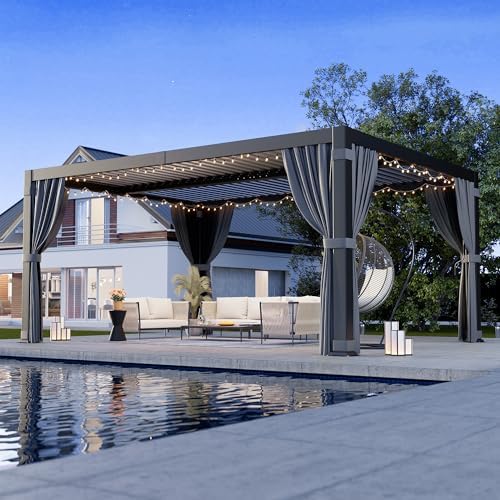
- BCGarden Score9.0
BCGarden scores from 0 to 10 are automatically scored by our AI consumer report tool based upon the data collected. This score has no relationship or impact from any manufacturer or sales agent websites. Learn more
- BrandAirWire

- BCGarden Score9.4
BCGarden scores from 0 to 10 are automatically scored by our AI consumer report tool based upon the data collected. This score has no relationship or impact from any manufacturer or sales agent websites. Learn more
- BrandFansaFurn

- BCGarden Score9.0
BCGarden scores from 0 to 10 are automatically scored by our AI consumer report tool based upon the data collected. This score has no relationship or impact from any manufacturer or sales agent websites. Learn more
- BrandAoxun

- BCGarden Score9.0
BCGarden scores from 0 to 10 are automatically scored by our AI consumer report tool based upon the data collected. This score has no relationship or impact from any manufacturer or sales agent websites. Learn more
- BrandVORTEXTOVE

- BCGarden Score8.6
BCGarden scores from 0 to 10 are automatically scored by our AI consumer report tool based upon the data collected. This score has no relationship or impact from any manufacturer or sales agent websites. Learn more
- BrandYOLENY

- BCGarden Score8.6
BCGarden scores from 0 to 10 are automatically scored by our AI consumer report tool based upon the data collected. This score has no relationship or impact from any manufacturer or sales agent websites. Learn more
- BrandSAILARY

- BCGarden Score8.2
BCGarden scores from 0 to 10 are automatically scored by our AI consumer report tool based upon the data collected. This score has no relationship or impact from any manufacturer or sales agent websites. Learn more
- BrandN/A
Last update on 2026-11-18 / Affiliate links / Images, Product Titles, and Product Highlights from Amazon Product Advertising API
Pool and Coastal Garden Owners
Chlorine splash, salt air, and year round humidity punish outdoor structures, and aluminum simply does not rust through the way steel does or rot like wood. Around pools, an aluminum pergola gives shade for loungers and a structure for outdoor showers and towel hooks without a maintenance calendar. Choose a powder coat finish with sealed edges, and rinse salt deposits off a few times a season. If your site sits in a hurricane or storm corridor, treat the wind rating and anchoring sections below as your primary buying criteria.
Gardeners Creating Shade for Plants and People
A pergola is also a plant tool: it makes the dappled light that shade loving perennials, ferns, and container collections want at the edge of a sunny patio. Louvered roofs serve this group brilliantly, opening for morning sun and closing against midday scorch, and they give climbing plants a structure at the posts. Gardeners planning vines should note that aluminum stays cooler to the touch than dark steel, which tender stems appreciate. Leave one bay unshaded and your sun lovers still get their corner.
Homeowners Who Want Shade Without a Maintenance Hobby
Wood pergolas are beautiful and hungry: stain every few years, boards that check and warp, and eventual rot at the post bases. Aluminum asks for a wash and an occasional check of the fasteners, and that is the whole calendar. If your weekends belong to the garden itself rather than to maintaining structures in it, aluminum is the honest choice. The comparison with timber is worth reading in full, and our guide to the best wood pergola designs makes the case for wood where its warmth matters more than its upkeep.
Roof Style: Louvered, Canopy, or Open Rafters
The roof decides how the pergola actually performs. Adjustable louvers tilt from open sky to a closed, rain shedding cover, giving real control over light and weather, and motorized versions appear in our roundup of the best motorized pergola options for buyers who want that control from a remote. Retractable fabric canopies cost less and soften the look, but they flap in wind and come down for winter. Open rafter tops are the classic pergola silhouette and give partial shade only, best where a vine will finish the job over a few seasons.
Size, Post Layout, and True Coverage
Common kits run 10 by 10, 10 by 12, and 12 by 16 feet, quoted as roof dimensions, while the posts sit inside that footprint, so measure your furniture plan against the post spacing, not the headline size. Shade also moves: a roof that covers the table at noon leaves it bare at four, so consider orientation and the sun path across your patio. Height matters for ceiling fans, heaters, and tall planters; most kits stand about 8 to 9 feet at the beam. Draw the footprint on the slab with chalk before ordering and live with the chalk marks for a day.
Frame Gauge, Powder Coat, and Hardware
Not all aluminum is equal. Thicker wall posts and beams flex less in wind and feel solid when you lean a ladder against them, while the thinnest kits flex and rattle. A quality powder coat should be even, with no bare edges at cut ends, because the coating is the corrosion defense. Stainless fasteners are a quiet mark of a serious kit; plated screws in a coastal yard will streak rust within a year. Check whether replacement parts like louver pins and end caps are sold separately, because a pergola should be repairable across a decade.
Anchoring, Wind, and Snow Load
A pergola is a roof waiting for a storm to test it, and anchoring is where safety lives. Posts must bolt to concrete footings, a slab of adequate thickness, or deck framing reinforced for the load, never just to deck boards or pavers. Kits carry wind ratings that assume correct anchoring; ignore the method and the rating is fiction. In snow country, check the load rating and plan to open louvers or remove canopies before storms so weight does not accumulate. Gardeners on exposed sites should treat engineered anchoring as part of the purchase price.
Drainage and Water Management
Louvered pergolas shed rain, and the better designs hide gutters inside the beams and drain through the posts, so water exits at the base instead of dripping through the seating area. Ask where the water goes on your slab; a post that empties beside a garden bed will dig a muddy crater over a season. Fabric canopies pool water if the pitch is shallow, which stretches fabric and strains the frame, so a canopy design needs either slope or a habit of retracting before rain. Drainage rarely sells a pergola, but it decides whether you sit under it the morning after a storm.
Attached models ledger to the house wall, shading the patio right outside the door and using the wall as one side of their structure, which saves posts and money. They demand sound attachment into framing, flashing where the ledger meets siding, and care around roof overhangs and gutters. Freestanding models go anywhere: over a garden room at the lawn edge, beside a pool, or on a deck, where our guide to the best pergola for deck layouts covers the framing reinforcement decks require. Many towns require a permit for attached structures and some for freestanding ones above a size threshold, so check local rules and any HOA conditions before the kit arrives.
Basic open rafter kits in smaller sizes start around $500 to $1,000, with light frames and simple anchoring hardware. The satisfying middle, about $1,000 to $3,000, buys sturdier posts, retractable canopies or manual louvers, and finishes that hold up in weather. Premium louvered systems with drainage in the posts and motorization run about $3,000 to $6,000 and up in kit form. Add the real costs around the kit: concrete work, a second pair of hands or hired assembly, and permits, because a pergola budget that ends at the box usually stalls at the slab.
- Bolting posts to pavers or deck boards instead of footings or framing, so the first storm racks or lifts the structure.
- Ordering by roof dimensions and discovering the posts crowd the table legs and the grill swing.
- Skipping the permit and HOA check, then being ordered to move a structure that is already anchored in concrete.
- Choosing a fixed open roof for a patio that needs rain cover, and spending every shower watching the cushions get soaked.
- Assembling alone on a windy day, when a half built frame acts as a sail and panels bend before they are braced.
Wash the frame each spring with mild soap and water, rinse salt and pollen out of the louver pivots, and work the louvers through their full range so the mechanism never sits seized. Touch up powder coat chips promptly with the maker paint or a matched exterior paint, because exposed edges are where corrosion starts. Before winter, remove fabric canopies, open louvers in snow country, and check anchor bolts for tightness after the first storm season. Vines need an annual edit too: growth that reaches the roof mechanism jams louvers and holds damp against the finish.
What is the best aluminum pergola?
The best one matches its roof to your weather: louvered for control, canopy for soft shade on a budget, open rafters where vines will finish the cover. After roof style, judge post thickness, anchoring hardware, and whether the size fits your furniture inside the post lines. A pergola is a decade purchase assembled over a weekend, so parts availability and instructions quality matter as much as the showroom finish.
Are aluminum pergolas worth it compared with wood?
They are worth it when your priority is shade with minimal upkeep, especially near pools, coasts, and in humid climates where wood maintenance compounds yearly. Wood still wins on traditional looks and can be cheaper in large custom sizes built by a carpenter. The lifetime math favors aluminum for most kit buyers: the purchase prices overlap in the middle range, but only one of the two asks for stain, board replacement, and rot repair across its life.
How long does an aluminum pergola last?
A well anchored aluminum pergola commonly serves 15 to 25 years, with the powder coat and moving parts aging before the frame itself. Louver mechanisms and canopy fabrics are the wear items, typically needing service or replacement once in that span. Longevity collapses when anchoring is improvised or when water is allowed to pool against unsealed cuts, so the installer, meaning you, decides most of the lifespan on assembly weekend.
Can an aluminum pergola handle wind and snow?
Yes, within its ratings, and only when anchored exactly as the maker specifies. Quality kits are engineered for substantial wind when bolted to proper footings, and louvered roofs reduce wind pressure by opening. Snow is managed by rating and by habit: open the louvers or clear the roof before accumulation in heavy snow zones. If your property sees hurricane force winds, look for kits with documented ratings for your region and consider a local installer who knows the code requirements.
Do I need a permit to build an aluminum pergola?
Often yes for attached models, and sometimes for larger freestanding ones, because codes treat a roofed structure as an addition to the property. Rules vary by town and by whether the pergola is anchored permanently, and HOA approval is a separate gate in many neighborhoods. The check costs a phone call before you buy; skipping it can cost the structure. Keep the approval paperwork with your house documents, since buyers and insurers both ask about unpermitted structures later.
An aluminum pergola is a long term promise to your garden: shade without a maintenance calendar, if the structure is sized honestly, anchored properly, and roofed for your weather. Use the product table above to compare sizes, roof styles, and load ratings against your slab and climate, and you will settle on the best aluminum pergola for your patio. Prices and availability can change, so check the product page before ordering.


Best Gas Grills for Small Decks: A Buying Guide for 2026
Best 9 ft Patio Umbrella for 2026: Coverage, Fabric and Bases

Best 12x16 Gazebo for 2026: Room for a Full Outdoor Room

Best Gazebo for Deck: Safe Shade for Raised Outdoor Rooms in 2026

Best 7.5 ft Patio Umbrella (2026): A Gardener's Buying Guide

Best 11 Ft Patio Umbrella (2026): Coverage, Bases and Care

Best Fire Pit With Lid for 2026: Safer Embers, Extra Table Space

Best Salt Spreaders: Our 2026 Checklist and Top 3 Picks








