
Best Fire Pit for Covered Patio in 2026: How to Add Fire Under a Roof Safely
A roof over the patio keeps the rain off your furniture and lets you sit outside weeks longer each year, but it also changes the rules for open flame. Smoke, rising heat, and sparks that would drift harmlessly into an open sky collect under a ceiling instead. Finding the best fire pit for covered patio use is mostly a safety exercise: the right fuel, the right clearance, and honest airflow matter more than looks.
Many gardeners start by browsing the best fire pit styles in general, then narrow the field once they measure their roof height. That order works well. The comparison table below lists models suited to roofed spaces, and this guide walks through the checks that decide whether any fire feature belongs under your cover at all.
Compare Products
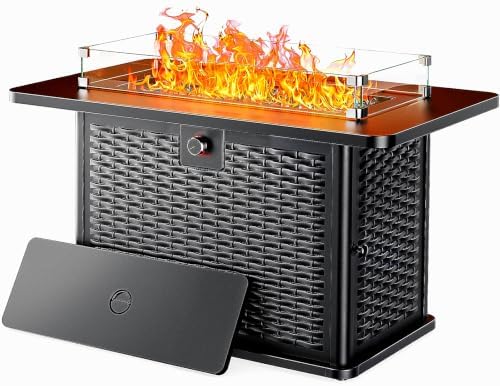
Ciays 43-Inch Rectangular Propane Fire Pit with 60,000 BTU Output,
- BCGarden Score9.0
BCGarden scores from 0 to 10 are automatically scored by our AI consumer report tool based upon the data collected. This score has no relationship or impact from any manufacturer or sales agent websites. Learn more
- BrandCiays

- BCGarden Score9.2
BCGarden scores from 0 to 10 are automatically scored by our AI consumer report tool based upon the data collected. This score has no relationship or impact from any manufacturer or sales agent websites. Learn more
- BrandAoxun

- BCGarden Score9.0
BCGarden scores from 0 to 10 are automatically scored by our AI consumer report tool based upon the data collected. This score has no relationship or impact from any manufacturer or sales agent websites. Learn more
- BrandCiays

- BCGarden Score8.8
BCGarden scores from 0 to 10 are automatically scored by our AI consumer report tool based upon the data collected. This score has no relationship or impact from any manufacturer or sales agent websites. Learn more
- BrandTLGREEN

- BCGarden Score9.2
BCGarden scores from 0 to 10 are automatically scored by our AI consumer report tool based upon the data collected. This score has no relationship or impact from any manufacturer or sales agent websites. Learn more
- BrandBALI OUTDOORS

- BCGarden Score8.6
BCGarden scores from 0 to 10 are automatically scored by our AI consumer report tool based upon the data collected. This score has no relationship or impact from any manufacturer or sales agent websites. Learn more
- BrandSundale Outdoor

- BCGarden Score8.8
BCGarden scores from 0 to 10 are automatically scored by our AI consumer report tool based upon the data collected. This score has no relationship or impact from any manufacturer or sales agent websites. Learn more
- BrandLAUSAINT HOME

- BCGarden Score8.0
BCGarden scores from 0 to 10 are automatically scored by our AI consumer report tool based upon the data collected. This score has no relationship or impact from any manufacturer or sales agent websites. Learn more
- BrandN/A

- BCGarden Score8.0
BCGarden scores from 0 to 10 are automatically scored by our AI consumer report tool based upon the data collected. This score has no relationship or impact from any manufacturer or sales agent websites. Learn more
- BrandSolo Stove

- BCGarden Score8.2
BCGarden scores from 0 to 10 are automatically scored by our AI consumer report tool based upon the data collected. This score has no relationship or impact from any manufacturer or sales agent websites. Learn more
- BrandOutVue

- BCGarden Score9.2
BCGarden scores from 0 to 10 are automatically scored by our AI consumer report tool based upon the data collected. This score has no relationship or impact from any manufacturer or sales agent websites. Learn more
- BrandCiays
Last update on 2026-11-24 / Affiliate links / Images, Product Titles, and Product Highlights from Amazon Product Advertising API
Homeowners With Tall, Open Sided Patio Roofs
If your cover stands nine feet or higher with open sides, you have the easiest path. A gas fire table or bowl with a listed clearance rating can sit comfortably under that roof, pushing warmth sideways to the seating instead of straight up. You still need to confirm the maker's clearance numbers, but your airflow clears exhaust the way the designers assumed. This is the setup most patio fire products are genuinely built for.
Entertainers Who Want Warmth Without Smoke
Smoke is the deal breaker under a roof, because it stains ceilings, sets off house alarms through open doors, and drives guests indoors. A propane fire pit burns clean with no drifting smoke, lights in seconds, and shuts off the moment the evening ends. Fire tables in this class double as a drinks surface in summer, which suits patios that host often. Choose an adjustable flame so you can run low heat on mild nights instead of roasting the front row.
Owners of Low Roofs and Screened Porches
If your ceiling sits under eight feet, your porch is screened or enclosed, or the roof is a fabric awning, the honest answer is that open flame does not belong there. Heat and exhaust have nowhere to go, and no product rating fixes geometry. You are better served by an electric patio heater under the roof, or by moving real fire into the open yard, where a best fire pit for backyard setup can burn safely with sky above it. Skipping the purchase is the right call here, and it protects both your roof warranty and your insurance.
Fuel Type: Why Gas Wins Under a Roof
Propane and natural gas dominate covered patios for a simple reason: they produce no sparks, no embers, and almost no smoke, and the flame height stays controlled. An open wood fire under a roof sends sparks and a full column of smoke into the ceiling, soots the underside, and can ignite dry leaves in gutters above. Even a wood burning fire pit marketed as low smoke still vents its exhaust straight up into your cover. Gel and ethanol burners give real flame at small scale with minimal heat, suiting tiny covered balconies where local rules allow them. Whatever you choose, read the manual's placement section before the style section.
Heat Output and How It Spreads
fire pits are rated in BTU, and covered patio models commonly range from about 30,000 to 65,000 BTU. More is not automatically better under a roof: an oversized unit blasts the ceiling with heat while guests at the edge stay cold. Fire tables spread warmth at seated height, which feels more even than a tall flame in a bowl. Judge by the seating circle you actually have; a compact table around 40,000 BTU warms four chairs nicely in a sheltered space, because the roof and walls already block the wind that steals heat in an open yard.
Clearance Ratings and Certifications
This is the single most important spec for a covered patio, and it is printed in the manual rather than on the marketing page. Makers list required clearance above and beside the unit, often 36 inches or more to combustible ceilings, and that number assumes the roof material and height you actually have. Look for certification to a recognized standard by a body such as CSA or ANSI, which means the clearances were verified rather than guessed. Measure from the top of the flame guard to the lowest beam, fan blade, or light fixture, not to the peak of the roof.
Size, Shape, and Tank Storage
Measure your covered footprint with the furniture in place, then leave walking room around the fire so nobody brushes past the flame with a cushion. Rectangular fire tables fit seating groups and hide a standard propane tank inside the base, which keeps hoses off the floor. Round bowls take more floor space for the same seating. Check how the tank door opens and whether a spare tank can sit nearby under cover, because a tank stored in full sun on the open deck ages faster and trips people. Low, wide units feel more stable when chairs bump them.
Ignition, Controls, and Shut Off Safety
Push button electronic ignition lights reliably without matches near the burner, and a thermocouple flame sensor cuts the gas if wind blows the flame out, which matters on breezy patios where gusts slide under the roof edge. A control knob with a clear off position and a separate tank valve gives you two shut offs. Some models add a tempered glass wind guard that steadies the flame and keeps napkins and curious fingers back. Avoid any unit that lacks a flame failure device for use in a roofed space, because unburned gas pooling under a cover is a genuine hazard.
Start by confirming permission, not placement. Some local fire codes, HOA rules, and home insurance policies restrict open flame under attached structures, and a quick check costs nothing compared with a denied claim. Position the pit on a level, non combustible surface: stone, concrete, or tile. On a wood or composite deck under the cover, add a fireproof deck mat rated for radiant heat, and remember the mat protects the floor, not the ceiling. Keep the unit out from under ceiling fans, pendant lights, and stored items such as cushions and outdoor curtains.
Ventilation deserves one deliberate check. Sit where guests will sit and think about where exhaust travels: open sides on at least two faces of the patio let combustion gases dilute and escape. Never run any fuel burning fire pit in a fully enclosed porch, sunroom, or garage, because carbon monoxide is colorless and odorless and builds up silently. A battery powered carbon monoxide alarm mounted in the covered space is cheap insurance, and any headache or dizziness during use means shut the fire down and get fresh air at once.
Small propane bowls and tabletop units start at around $150, with modest heat and simple controls. The covered patio mainstream sits at about $300 to $800 for fire tables with certified clearances, electronic ignition, and a hidden tank compartment. Above $800 you are paying for larger tables, natural gas plumbing readiness, and heavier materials such as cast aluminum that shrug off seasons outdoors. Add the cost of a fitted cover and a spare tank to any tier, since both protect the purchase.
- Burning wood under a patio roof, so sparks and smoke stain the ceiling and threaten the structure above.
- Measuring clearance to the roof peak instead of the lowest beam or fan, so the real gap falls short of the rating.
- Running a gas pit in a screened or enclosed porch, so carbon monoxide builds up with nowhere to go.
- Placing the pit on bare deck boards with no heat mat, so radiant heat scorches and warps the flooring.
- Leaving the tank valve open between uses, so a slow leak can fill the base cabinet with gas.
- Skipping the local code and HOA check, so the first complaint or claim ends the setup entirely.
Keep the burner ports clean, because spider webs and debris inside the burner tube are the most common cause of weak or yellow flames; a soft brush and compressed air clear them each spring. Wipe soot film off the roof facing surfaces and the pit rim with mild soapy water before it bakes on. Fit a weather cover whenever the pit sits idle, even under a roof, since wind driven rain still reaches most patios. Check the hose and connections yearly with soapy water to spot bubbles that reveal leaks, and store the propane tank upright outdoors, never in a sealed cabinet inside the house.
Can you use a fire pit under a covered patio safely?
Yes, with the right combination: a gas fueled unit, a maker listed clearance you can honestly meet, open sides for airflow, and a non combustible floor. Wood fires and enclosed porches fail those tests and should not be combined with a roof. When in doubt, the manual's clearance page and your local fire code outrank any product listing, so check both before the first burn.
How much ceiling clearance does a patio fire pit need?
Most gas fire pits list a minimum of about 36 inches from the top of the unit to combustible material above, and some large models ask for more. Measure to the lowest obstruction over the pit, which is often a beam, fan, or light rather than the ceiling itself. A practical new check: hold your hand above the running pit at head height; if the heat feels uncomfortable there, your ceiling is collecting that same heat for hours.
How long does a fire pit last?
A steel or cast aluminum gas fire pit kept covered typically serves 7 to 10 years or longer, with the ignition parts and burner ring as the usual first failures. Stainless steel burners resist rust the longest in damp climates. Replacement burners, thermocouples, and ignition modules are sold for most established brands, so a unit that stops lighting is often a repair, not a replacement.
How do you clean a fire pit that sits under a patio cover?
Let everything cool fully, lift out the lava rock or glass media into a bucket, and vacuum ash and grit from the burner pan with a shop vacuum. Wash the media with water outdoors if it looks sooty, and let it dry completely before returning it, because damp media can pop and spit when heated. Finish by wiping the ceiling facing trim and checking the underside of your patio roof for soot film that signals the flame is set too high.
Can you put a fire pit on a wood deck under a patio cover?
You can with a gas unit, a proper heat rated deck mat, and clearance on all sides, because the mat blocks the radiant heat that scorches boards. Composite decking softens at lower temperatures than wood, so check the deck maker's heat guidance as well as the fire pit manual. Never set a wood burning pit on any deck under a cover; that combination stacks floor, ceiling, and ember risks at once.
Fire under a roof rewards gardeners who measure first and buy second. Match the fuel to the space, respect the listed clearances, and keep air moving through the patio, and the product table above will steer you to a unit that fits your cover honestly. Get those basics right and the best fire pit for covered patio gatherings become the easiest evenings of the year: warm, clean burning, and finished with one turn of a knob. If your roof fails the clearance test, take the fire into the open yard and enjoy the covered patio for shade instead.


Best Dimmable Outdoor String Lights: A Buying Guide for 2026

Best Gazebo for Patio in 2026: Shade That Fits Your Slab and Furniture
Best Edison Outdoor String Lights for 2026: Bulb Shapes and Glow

Best Fence Solar Lights for 2026: A Garden Buying Guide

Best 12x14 Gazebo for 2026: Two Zones in One Rectangle

Best Fire Pit With Cover for 2026: Keep Rain Off Your Bowl

Best Fire Pit for Balcony in 2026: Small Flames, Strict Rules

Best Gazebo Under 1000 for 2026: Where the Money Should Go








