
How to Choose the Best Inline Fan for Grow Tent Ventilation
A grow tent traps heat and humidity fast once lights and plants are packed inside, and without steady airflow that buildup stalls growth or invites mold. The best inline fan for grow tent ventilation pulls hot, stale air out through ducting and keeps a tent close to ambient room conditions even during peak lighting hours. Picking the wrong size wastes money or leaves a tent stuffy no matter how long the fan runs. This guide covers CFM sizing, duct compatibility, speed control, and noise so the fan you choose actually matches your tent instead of just fitting the hole in the vent flap. A properly sized fan also makes every other piece of tent gear work better.
Compare Products

- BCGarden Score-
BCGarden scores from 0 to 10 are automatically scored by our AI consumer report tool based upon the data collected. This score has no relationship or impact from any manufacturer or sales agent websites. Learn more
- BrandVIVOSUN

- BCGarden Score9.6
BCGarden scores from 0 to 10 are automatically scored by our AI consumer report tool based upon the data collected. This score has no relationship or impact from any manufacturer or sales agent websites. Learn more
- BrandAC Infinity

- BCGarden Score-
BCGarden scores from 0 to 10 are automatically scored by our AI consumer report tool based upon the data collected. This score has no relationship or impact from any manufacturer or sales agent websites. Learn more
- BrandMELONFARM

- BCGarden Score-
BCGarden scores from 0 to 10 are automatically scored by our AI consumer report tool based upon the data collected. This score has no relationship or impact from any manufacturer or sales agent websites. Learn more
- BrandHon&Guan

- BCGarden Score8.2
BCGarden scores from 0 to 10 are automatically scored by our AI consumer report tool based upon the data collected. This score has no relationship or impact from any manufacturer or sales agent websites. Learn more
- BrandN/A

- BCGarden Score9.4
BCGarden scores from 0 to 10 are automatically scored by our AI consumer report tool based upon the data collected. This score has no relationship or impact from any manufacturer or sales agent websites. Learn more
- BrandN/A

- BCGarden Score8.4
BCGarden scores from 0 to 10 are automatically scored by our AI consumer report tool based upon the data collected. This score has no relationship or impact from any manufacturer or sales agent websites. Learn more
- BrandN/A
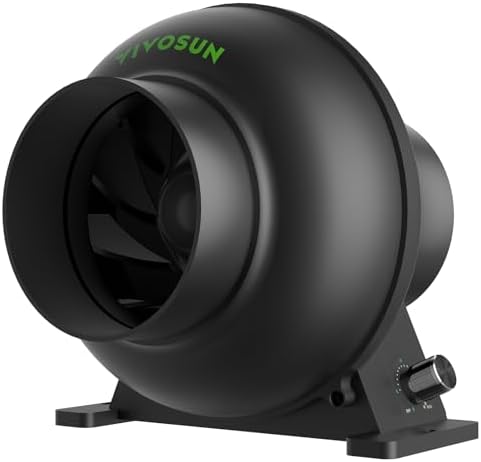
- BCGarden Score8.6
BCGarden scores from 0 to 10 are automatically scored by our AI consumer report tool based upon the data collected. This score has no relationship or impact from any manufacturer or sales agent websites. Learn more
- BrandVIVOSUN

- BCGarden Score8.6
BCGarden scores from 0 to 10 are automatically scored by our AI consumer report tool based upon the data collected. This score has no relationship or impact from any manufacturer or sales agent websites. Learn more
- BrandVIVOSUN
Last update on 2026-11-25 / Affiliate links / Images, Product Titles, and Product Highlights from Amazon Product Advertising API
These three stand out in the product table above for different budgets and needs.
Best overall: the VIVOSUN G4 Air Filtration Kit, around $103, is our first choice from the table.
Best value: the 4 Inch Duct Inline Ventilation Exhaust Fan 296 CFM, around $43, is the lowest priced of these three.
Also great: the AC Infinity CLOUDLINE S6, around $99, is another strong option with a different set of features.
CFM, or cubic feet per minute, tells you how much air a fan can move, and it is the single most important spec when sizing ventilation.
Calculating Tent Volume
Multiply a tent's length, width, and height in feet to get cubic volume, then figure a fan should be able to exchange that volume every one to three minutes for solid air control.
Accounting for Filters and Ducting
A carbon filter and any bends in ducting reduce actual airflow below the fan's rated CFM, so it helps to size up rather than buying the exact minimum number on paper.
Adjusting for Lights and Heat Load
Higher wattage lighting adds more heat to remove, which means a tent running hot lights needs a fan closer to the top of its calculated CFM range rather than the bottom.
An inline fan only performs well when its duct diameter matches the tent's vent ports and any filter already in use.
Common Duct Sizes
Most small to mid size tents use 4 or 6 inch ducting, while larger setups often move up to 8 inches to keep airflow efficient without excess strain on the motor.
Avoiding Mismatched Connections
Connecting a fan to a smaller duct than its housing restricts airflow and can shorten motor life, so checking flange size against existing ducting before buying prevents an awkward return.
Flexible vs Rigid Ducting
Flexible ducting is easier to route around a tent's frame, while rigid sections resist crushing and maintain more consistent airflow over long straight runs.
Matching duct size correctly is one of the fastest ways to get real performance out of the best inline fan for grow tent ventilation instead of losing airflow to a poor fit. Checking real world CFM after filters and ducting is the single best way to confirm you actually bought the best inline fan for grow tent ventilation for your setup.Fan noise varies widely between models, and a loud unit running around the clock in a shared living space can be a real problem.
Decibel Ratings
Lower decibel ratings mean quieter operation, though very quiet fans sometimes trade off some CFM, so it is worth checking both specs together rather than one alone.
Variable Speed Controllers
A speed controller lets you dial airflow down during cooler periods and up during peak heat, which also reduces noise when full power is not needed.
Vibration and Mounting
Rubber mounting brackets or hanging the fan with cord rather than bolting it directly to the tent frame cuts down on vibration noise transmitted through the structure.
Where a fan sits in the airflow path affects how evenly a tent stays ventilated, not just how strong the fan itself is.
Exhaust vs Intake Position
Most setups run the inline fan on exhaust, pulling air out through the top while passive intake vents let fresh air in lower down, which creates negative pressure and controls odor better than blowing air in.
Creating Negative Pressure
A tent under slight negative pressure pulls in through every seam and vent rather than pushing air out through gaps, keeping smell contained if a carbon filter is attached to the exhaust line.
Ducting Length and Bends
Every extra foot of ducting and every sharp bend reduces effective airflow, so routing the shortest, straightest path from fan to exhaust point gets the most out of the unit.
Getting placement right matters just as much as picking the best inline fan for grow tent ventilation in the first place, since even a well sized fan underperforms in a poorly routed setup.What size inline fan do I need for a 4x4 grow tent?
A 4x4x7 tent has roughly 112 cubic feet of volume, so a fan rated between 150 and 220 CFM after accounting for filter and duct loss usually keeps airflow strong without being oversized.
Should the inline fan pull air out or push air in?
Most growers run the fan on exhaust, pulling hot air out through a carbon filter while passive vents let cooler air in. This setup creates negative pressure and controls odor more effectively than blowing air inward.
Does a bigger fan always mean better ventilation?
Not necessarily. An oversized fan wastes energy and can dry out a tent too quickly, while a properly matched fan with speed control gives more precise, efficient airflow for the actual tent size.
How loud are inline fans typically?
Noise varies by model and speed setting, generally ranging from around 30 to 55 decibels. Running a fan at partial speed with a controller usually keeps noise well below its maximum rated level.
Can one inline fan handle both a carbon filter and ducting?
Yes, as long as the fan's CFM rating is sized generously enough to absorb the airflow loss from both the filter and any duct length or bends between the tent and exhaust point.
How often should an inline fan run?
Most growers run the fan continuously during lights on hours and on a lower or intermittent setting during lights off hours to keep temperature and humidity stable around the clock.
The best inline fan for grow tent ventilation comes down to matching CFM to your tent's real volume, using the correct duct diameter, and giving yourself speed control for quieter, more efficient operation. Get those three things right and a tent stays cool, dry, and odor free through even the hottest stretch of a grow cycle. Everything else, from carbon filters to circulation fans, works better once the core exhaust system is sized correctly.


Best 2x4 Grow Tent in 2026: A Complete Buying Guide

Best 4x4 Grow Tent for 2026: How to Choose
Best 2x2 Grow Tent Guide for 2026: How to Choose the Right One

Best Plant Propagation Station for Rooting Cuttings

Best Oscillating Fan for Grow Tent

Best LED Grow Light Dimmer Controller

Best Plant Yo-Yo Trellis Clips

Best Hydroponic Garden Towers: Pump and Reservoir Guide








