Best String Trimmer Line: Shapes, Sizes, and What Actually Holds Up
Trimmer line looks simple until you're standing in the aisle facing a dozen spools with different shapes, thicknesses, and materials, all claiming to be the toughest option available. The best string trimmer line for your yard depends less on brand and more on two things: the shape of the line and its diameter, matched to what you're actually cutting. In this guide, you'll learn how round, twisted, square, and serrated lines differ, how to pick the right diameter, and why line keeps breaking or melting when it isn't matched to the job.
Compare Products

- BCGarden Score8.0
BCGarden scores from 0 to 10 are automatically scored by our AI consumer report tool based upon the data collected. This score has no relationship or impact from any manufacturer or sales agent websites. Learn more
- BrandN/A

- BCGarden Score9.2
BCGarden scores from 0 to 10 are automatically scored by our AI consumer report tool based upon the data collected. This score has no relationship or impact from any manufacturer or sales agent websites. Learn more
- BrandHusqvarna

- BCGarden Score9.2
BCGarden scores from 0 to 10 are automatically scored by our AI consumer report tool based upon the data collected. This score has no relationship or impact from any manufacturer or sales agent websites. Learn more
- BrandA ANLEOLIFE

- BCGarden Score8.6
BCGarden scores from 0 to 10 are automatically scored by our AI consumer report tool based upon the data collected. This score has no relationship or impact from any manufacturer or sales agent websites. Learn more
- BrandN/A
- BCGarden Score9.0
BCGarden scores from 0 to 10 are automatically scored by our AI consumer report tool based upon the data collected. This score has no relationship or impact from any manufacturer or sales agent websites. Learn more
- BrandN/A
- BCGarden Score9.0
BCGarden scores from 0 to 10 are automatically scored by our AI consumer report tool based upon the data collected. This score has no relationship or impact from any manufacturer or sales agent websites. Learn more
- BrandN/A

- BCGarden Score9.4
BCGarden scores from 0 to 10 are automatically scored by our AI consumer report tool based upon the data collected. This score has no relationship or impact from any manufacturer or sales agent websites. Learn more
- BrandECHO

- BCGarden Score8.8
BCGarden scores from 0 to 10 are automatically scored by our AI consumer report tool based upon the data collected. This score has no relationship or impact from any manufacturer or sales agent websites. Learn more
- BrandN/A

EGO Power+ Twisted String Trimmer Lines, Pre-Cut 0.095", 5-Pack -
- BCGarden Score9.4
BCGarden scores from 0 to 10 are automatically scored by our AI consumer report tool based upon the data collected. This score has no relationship or impact from any manufacturer or sales agent websites. Learn more
- BrandEGO Power+

- BCGarden Score9.4
BCGarden scores from 0 to 10 are automatically scored by our AI consumer report tool based upon the data collected. This score has no relationship or impact from any manufacturer or sales agent websites. Learn more
- BrandBLACK+DECKER

- BCGarden Score9.0
BCGarden scores from 0 to 10 are automatically scored by our AI consumer report tool based upon the data collected. This score has no relationship or impact from any manufacturer or sales agent websites. Learn more
- BrandVIABRICO

- BCGarden Score9.2
BCGarden scores from 0 to 10 are automatically scored by our AI consumer report tool based upon the data collected. This score has no relationship or impact from any manufacturer or sales agent websites. Learn more
- BrandWORX
Last update on 2026-10-23 / Affiliate links / Images, Product Titles, and Product Highlights from Amazon Product Advertising API
These three stand out in the product table above for different budgets and needs.
Best overall: the 40V 14" String Trimmer, around $108, is our first choice from the table.
Best value: the Echo 330095071 String Trimmer Line, around $24, is the lowest priced of these three.
Also great: the Husqvarna Titanium Force 0.095 Weed Eater String Trimmer Line, around $50, is another strong option with a different set of features.
Round Line
Round line is the most common shape and the easiest to find. It feeds smoothly through bump feed heads, lasts longer than more aggressive shapes, and rarely snags. The tradeoff is a less aggressive cut, so round line struggles more against thick or woody weeds than shapes with cutting edges.
Twisted Line
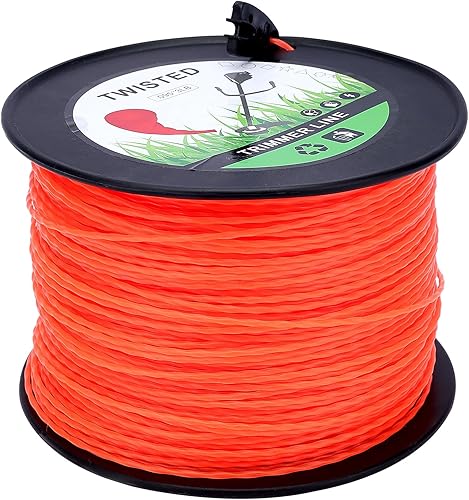
Twisted line spirals along its length, which reduces vibration and noise compared to round line while still holding up well against light obstacles like wire fencing. It's a solid middle ground choice for homeowners who want a slight cutting upgrade over round line without jumping to a more aggressive, faster wearing shape.
Square and Star Shaped Line
Square, star, and other multi sided lines have edges that slice rather than tear through vegetation, giving a cleaner cut on grass and moderate weeds. Those same edges wear down faster than round line, so square and star shapes trade some lifespan for cutting performance.
Serrated Line
Serrated line has small teeth along its edges, similar to a saw blade, which makes it the most aggressive option for thick weeds and light brush. It's also the noisiest and least durable shape, so it's better suited to occasional heavy clearing than everyday lawn maintenance.
Trimmer line diameter is usually printed as a decimal, like .065, .080, or .095 inches, and thicker isn't automatically better. Light diameters work fine for regular lawn grass and light weeds, and they put less strain on smaller trimmer motors. Mid range diameters handle typical yard use, including moderate weeds along fences and beds. Heavier diameters are built for thick, woody weeds or near daily commercial use, but running line that's thicker than your trimmer head is rated for can strain the motor and cause it to feed poorly.
Frequent breakage usually comes down to one of two things: line that's too thin for the vegetation being cut, or technique that generates too much friction heat. Pushing the line too deep into thick material, rather than letting the tip do the work, causes heat buildup that can melt or fuse the line before it ever snaps clean. Line also breaks more easily around hard edges like wire fencing or stone borders, which is where a twisted or heavier gauge line tends to outlast round line.
Most trimmer line is made from nylon or a co polymer blend, and co polymer lines generally resist wear and breakage better, though they usually cost more per spool. Before buying, check your trimmer head's maximum line diameter, since feeding line that's too thick can jam the head or overload the motor. Loading a spool is usually straightforward once you know your head type, whether it's a bump feed, fixed line, or pivot style that takes a pre cut length. If you're also shopping for the trimmer itself, it helps to start with a solid string trimmer that matches the line and cutting swath you plan to use.
Why does trimmer line keep breaking?
Breakage is usually caused by line that's too thin for the vegetation, poor technique that generates excess friction heat, or repeated contact with hard edges like fences and stone. Switching to a slightly thicker or more durable shape often solves the problem.
What size trimmer line should I use?
Match diameter to your typical yard work: lighter gauges for regular grass and light weeds, mid range for everyday yard use, and heavier gauges for thick or woody weeds. Always stay within your trimmer head's rated maximum diameter.
Is thicker trimmer line always better?
No. Thicker line cuts tougher material but puts more strain on the motor and can feed poorly if it exceeds what your trimmer head is rated for. Matching diameter to the job, not maximizing it, gives the best results.
Does trimmer line material matter?
Yes. Co polymer blends generally outlast basic nylon line in durability and resistance to breakage, though they typically cost more. For heavy or frequent use, the extra durability is usually worth the price difference.
Can I use any line in any trimmer head?
Not quite. Every trimmer head has a maximum line diameter it can handle, and some heads are built for a specific shape or a pre cut length rather than a continuous spool. Check your manual before buying a shape or size that may not fit.
How much trimmer line should I buy at once?
A small spool is usually enough for occasional trimming, while frequent users or larger properties benefit from buying a larger spool or multi pack to avoid running out mid season.
Choosing the best string trimmer line comes down to matching shape and diameter to what you're actually cutting, not grabbing whichever spool is cheapest or thickest. Round and twisted lines suit everyday lawn work, while square and serrated shapes earn their keep against tougher vegetation. Get those two choices right and you'll spend a lot less time reloading a spool mid job.


Best Battery Lawn Edgers: What to Look for Before Buying

Best String Trimmers for Women: What Actually Makes One Easy to Handle

Best Log Splitters

Best Budget Electric Chainsaw: What a Low Price Actually Gets You
Best Heavy Duty Electric Chainsaw: What Separates Real Power From Marketing Hype

Best Chainsaws

Best Gas String Trimmer: What Engine, Shaft, and Fuel Setup Actually Matter

Best Battery Hedge Trimmers: Comparing Voltage Platforms