
Best 150 ft Garden Hose Buying Guide for 2026
A hose this long is not really a hose purchase; it is a plumbing decision for the whole property. The best 150 ft garden hose must move water across a big yard without the nozzle fading to a dribble at the far end, and it must survive being reeled, dragged, and stored at serious weight. This guide focuses on the three things that decide success at this length: diameter, material, and fittings.
The comparison table below sets out the long hose builds and their flow figures. If your property is smaller than this class assumes, start with our overview of the best garden hose range and size down honestly; an oversized hose you hate hauling will live in a tangled pile.
Compare Products

- BCGarden Score9.0
BCGarden scores from 0 to 10 are automatically scored by our AI consumer report tool based upon the data collected. This score has no relationship or impact from any manufacturer or sales agent websites. Learn more
- BrandAEROMIXER MIX + AERATE WITH ONE PUMP

- BCGarden Score9.0
BCGarden scores from 0 to 10 are automatically scored by our AI consumer report tool based upon the data collected. This score has no relationship or impact from any manufacturer or sales agent websites. Learn more
- BrandN/A

Beitopamz 150 ft Garden Hose, Flexible and Durable, Leak-Free Connections
- BCGarden Score8.8
BCGarden scores from 0 to 10 are automatically scored by our AI consumer report tool based upon the data collected. This score has no relationship or impact from any manufacturer or sales agent websites. Learn more
- Brandbeitopamz
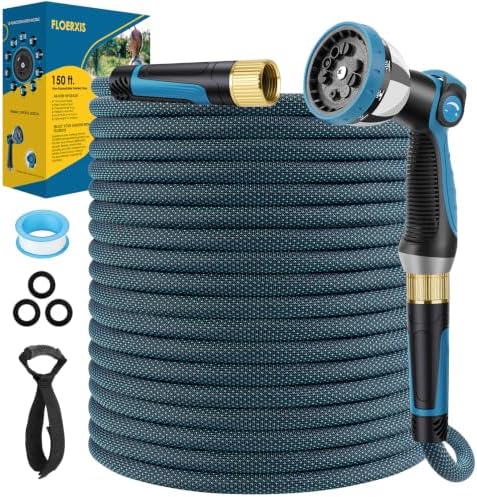
FLOERXIS Non-Expandable Garden Hose 150 ft, Lightweight Flexible Anti-Kink
- BCGarden Score9.0
BCGarden scores from 0 to 10 are automatically scored by our AI consumer report tool based upon the data collected. This score has no relationship or impact from any manufacturer or sales agent websites. Learn more
- BrandFLOERXIS

Rosy Earth Metal Garden Hose 150 ft, 304 Stainless Steel,
- BCGarden Score9.2
BCGarden scores from 0 to 10 are automatically scored by our AI consumer report tool based upon the data collected. This score has no relationship or impact from any manufacturer or sales agent websites. Learn more
- BrandRosy Earth

- BCGarden Score9.6
BCGarden scores from 0 to 10 are automatically scored by our AI consumer report tool based upon the data collected. This score has no relationship or impact from any manufacturer or sales agent websites. Learn more
- BrandN/A

SPECILITE Garden Water Hose 150 ft x 5/8" for yard,
- BCGarden Score8.4
BCGarden scores from 0 to 10 are automatically scored by our AI consumer report tool based upon the data collected. This score has no relationship or impact from any manufacturer or sales agent websites. Learn more
- BrandSPECILITE

- BCGarden Score8.4
BCGarden scores from 0 to 10 are automatically scored by our AI consumer report tool based upon the data collected. This score has no relationship or impact from any manufacturer or sales agent websites. Learn more
- BrandN/A

- BCGarden Score8.0
BCGarden scores from 0 to 10 are automatically scored by our AI consumer report tool based upon the data collected. This score has no relationship or impact from any manufacturer or sales agent websites. Learn more
- BrandFlexon
Last update on 2026-11-24 / Affiliate links / Images, Product Titles, and Product Highlights from Amazon Product Advertising API
This length serves properties where the water source and the plants are genuinely far apart.
Large Lot Owners With Beds Far From the House
On a half acre or more, the vegetable plot, the back fence beds, and the new trees often sit well beyond a standard hose. One 150 ft run from the house spigot reaches them all without moving a cart or joining hoses mid job. The catch is weight and storage, so this group should budget for a reel cart from the start. Done right, the setup turns distant beds into a normal part of the watering route instead of a special expedition.
Vegetable Growers Watering Long Rows
Row watering punishes weak flow: a soaker line or a sprinkler at the end of 150 ft needs real pressure left in the hose to work evenly. Growers benefit from the widest diameter and the smoothest lining they can afford, since every fitting and kink taxes the far rows. Many run the hose along a fence line semi permanently through the season, which also argues for a jacket that tolerates sun. Even coverage at the far row, not the near one, is the test this group should shop by.
Tree and Orchard Owners Filling Deep Soak Rings
New trees need slow, deep water delivered at the drip line, often far from any spigot. A long hose left trickling at each tree in turn is the simple system, and the job takes hours of unattended flow rather than minutes of spraying. That use favors durable rubber that can lie on rough ground without abrading, plus fittings that seal perfectly at low pressure. Our notes on the best lightweight garden hose class matter less here; at this task, toughness beats carry weight.
At 150 ft, small specs compound: diameter, pressure loss, weight, couplings, kinks, and storage decide the daily reality.
Diameter Decides Your Flow at 150 ft
Friction steals pressure along every foot of hose, and narrow bores lose far more than wide ones. A 3/4 inch hose can deliver roughly twice the flow of a 1/2 inch hose over this distance, which is the difference between a sprinkler that covers its circle and one that droops. The 5/8 inch standard sits between, adequate for nozzles and cans but noticeably weaker at the far end. For 150 ft, treat 3/4 inch as the serious choice and anything slimmer as a compromise you accept for lower weight.
Pressure Loss and Your Spigot Pressure
Home spigots commonly deliver about 40 to 60 PSI, and hose friction can spend a large share of that before the water exits. Do a bucket test before you buy: time how long your current setup takes to fill a five gallon bucket at the spigot, then imagine the far end performing worse. High, smooth flow linings and full bore fittings protect what pressure you have. If your home pressure is already low, diameter and a short, wide connector matter more than any hose brand claim.
Material Weight Over a Long Run
Material choice at 150 ft is a weight decision. A rubber hose of this length can weigh around 40 pounds dry and far more with water inside, which is why it belongs on a reel cart, not over your shoulder. Vinyl weighs less but stiffens and kinks, and a kink 100 ft behind you means a long walk back. Hybrid and polyurethane builds split the difference, staying flexible at lower weight. Match the material to how the hose will actually move: cart, fixed line, or frequent hauling.
Coupling Quality and Repair Options
At this length, you will eventually drive over, step on, or snag a coupling, so repairability is a feature, not a detail. Heavy brass fittings with standard threads accept replacement washers and can be cut off and refitted with a repair kit when the hose end crushes. Crimped or molded ends cannot be repaired, turning a small accident into a full replacement. Buy the hose with the fitting quality you would want at year five, because the tube usually outlasts cheap ends by a wide margin.
Kink Behavior Far From the Spigot
Every hose kinks at bends; the question is whether it recovers or takes a set that repeats daily. Reinforced walls and a round, stable profile resist the flat fold that becomes permanent. Lay a new long hose out straight in the sun for its first day so it relaxes into its natural shape before you coil it. When you do hit a kink mid job, straighten it by hand rather than yanking from the nozzle end, which stresses the far coupling and can tear the lining.
Storage: Reels and Carts for 150 ft
Storage makes or breaks ownership at this size. A frame reel cart with a wide drum holds the full length in neat layers and rolls to the spigot, while a wall reel suits a hose that deploys in one straight line. Wind the hose onto the reel while it is still slightly pressurized, and it coils rounder and tighter; drain it afterward through the open end. In winter, a drained hose on its reel in the garage is the whole job, and it beats wrestling a frozen coil in spring.
Joining a 100 ft and a 50 ft hose reaches the same places, and it lets you use the short half alone for near jobs. The costs are a mid run coupling that leaks if its washer ages, a snag point that catches on every corner, and a little extra pressure loss at the joint. A single 150 ft hose avoids all three and behaves better on a reel. If your far watering is occasional, joined hoses are the flexible answer; if it is daily, the single run wins. The best 100 ft garden hose options pair well as the long half of a joined setup.
- Under $50: thin vinyl at this length, with weak flow at the far end; buy only for rare, light use.
- About $50 to $100: mid weight vinyl and hybrid hoses with decent fittings for regular watering.
- About $100 to $200: wide diameter rubber and premium hybrids with heavy brass ends, built for daily seasons of use.
- Choosing a slim 1/2 inch diameter for 150 ft, then blaming the spigot when the far sprinkler barely turns.
- Leaving the hose stretched across the lawn all season, where sun, mowers, and foot traffic age it fast.
- Storing 150 ft as a ground pile that kinks, harbors wasps, and takes twenty minutes to untangle.
- Pulling the hose by its nozzle end to move it, which tears at the far coupling and lining.
- Skipping the bucket test and discovering the flow problem only after the return window closes.
Drain a long hose fully before storage; 150 ft holds several gallons, and that water freezes hard enough to split linings and couplings. Keep it on its reel in shade or indoors, since a season of full sun on a fence line can halve a vinyl hose's life. Replace coupling washers at the first drip, and cut back and refit the end if a coupling crushes rather than forcing a leaking joint. Walk the line once each spring, checking for abrasion spots where it crosses gravel, concrete edges, or gate hardware.
Will a 150 ft garden hose lose water pressure?
Yes, friction loss is unavoidable, and it grows with distance and shrinks with diameter. A wide 3/4 inch hose keeps far end flow usable for sprinklers and soakers, while a slim hose may deliver only a gentle stream at the nozzle. You can measure your real loss with a bucket and a stopwatch at the far end, which beats guessing from spec sheets.
Can a 150 ft hose run a sprinkler at the far end?
It can, provided the diameter is generous and your home pressure is healthy. Oscillating and rotary sprinklers need both flow and pressure to throw their full pattern, so test with your actual sprinkler before committing to a layout. If the pattern falls short, step up in diameter before blaming the sprinkler, and keep the run as straight as the yard allows.
How much does a 150 ft hose weigh full of water?
A 5/8 inch hose of this length holds roughly seven gallons, adding around 55 to 60 pounds of water to the hose's own weight. That is why reel carts, not arms, move these hoses. Drain before rewinding whenever you can; the reel turns easier and the hose stores flatter and cleaner.
Can a 150 ft hose supply a pressure washer?
It can feed one, but the long run may starve a larger washer at full demand, since pressure washers need strong, steady flow at the pump. The flow guidance in our best garden hose for pressure washer article explains the minimums. When possible, move the washer closer to the work and feed it with a shorter, wider hose instead.
How do I store 150 ft of hose for winter?
Drain it completely by walking the length out downhill or over a fence, coil it onto its reel, and store the reel indoors out of freezing standing water. Joining the two ends together keeps out insects and grit. A hose stored dry, dark, and loosely coiled will come back in spring without the stiff, cracked bends that plague ground stored hoses.
The best 150 ft garden hose earns the title at the far end of your property, where flow either arrives or does not. Choose the widest diameter you can manage, fittings you can repair, and a reel you will actually use, guided by the specs in the product table above. Set up that way, one long run quietly turns distant beds and young trees into part of the normal watering round.


Best Water Flow Meter for Garden Hose

Best Garden Hose Splitter

Best 4 Zone Water Timer in 2026: Water Four Areas From One Faucet

Best 3/4 Inch Garden Hoses (2026): A Buying Guide for Gardeners

Best Expandable Hoses with Brass Fittings for Every Need: How to Pick the Right One for 2026

Best Galvanized Watering Can in 2026: A Buying Guide

Best Bluetooth Water Timer in 2026: A Buying Guide

Best 75 ft Garden Hoses for 2026: Reaching the Far End of the Yard








