
Best 24 Inch Snow Blowers in 2026: A Buying Guide
Twenty four inches is the classic snow blower width for a reason: it clears a two car driveway in a handful of passes, fits through a standard side gate, and still stores against a garage wall. The best 24 inch snow blower balances that width with enough engine and intake height for real snow belt storms. Go smaller and deep snow takes all morning; go wider and the machine stops fitting the spaces your life actually has. This guide sizes the class up honestly.
The 24 inch class is the heart of the best snow blower market, and most models here share a two stage gas layout, with battery versions arriving fast. We compare stage type, engine size, intake height, traction, and chute control, and the comparison table below gathers the key specs in one place. You will also find a fit check for your driveway and storage, price tiers, and the care that decides whether the machine starts in the first storm.
Compare Products

- BCGarden Score9.0
BCGarden scores from 0 to 10 are automatically scored by our AI consumer report tool based upon the data collected. This score has no relationship or impact from any manufacturer or sales agent websites. Learn more
- BrandEGO Power+

- BCGarden Score9.4
BCGarden scores from 0 to 10 are automatically scored by our AI consumer report tool based upon the data collected. This score has no relationship or impact from any manufacturer or sales agent websites. Learn more
- BrandPowerSmart

- BCGarden Score8.0
BCGarden scores from 0 to 10 are automatically scored by our AI consumer report tool based upon the data collected. This score has no relationship or impact from any manufacturer or sales agent websites. Learn more
- BrandHusqvarna

PowerSmart Self-Propelled 2-Stage Gas Snow Blower 24-inch 212cc Engine with
- BCGarden Score8.0
BCGarden scores from 0 to 10 are automatically scored by our AI consumer report tool based upon the data collected. This score has no relationship or impact from any manufacturer or sales agent websites. Learn more
- BrandPowerSmart

- BCGarden Score8.2
BCGarden scores from 0 to 10 are automatically scored by our AI consumer report tool based upon the data collected. This score has no relationship or impact from any manufacturer or sales agent websites. Learn more
- BrandAMERISUN

- BCGarden Score8.8
BCGarden scores from 0 to 10 are automatically scored by our AI consumer report tool based upon the data collected. This score has no relationship or impact from any manufacturer or sales agent websites. Learn more
- BrandN/A
- BCGarden Score8.6
BCGarden scores from 0 to 10 are automatically scored by our AI consumer report tool based upon the data collected. This score has no relationship or impact from any manufacturer or sales agent websites. Learn more
- BrandPowerSmart

- BCGarden Score9.6
BCGarden scores from 0 to 10 are automatically scored by our AI consumer report tool based upon the data collected. This score has no relationship or impact from any manufacturer or sales agent websites. Learn more
- BrandEGO Power+

Husqvarna ST124 212cc 24" 2 Stage Snow Blower 970710001
- BCGarden Score8.2
BCGarden scores from 0 to 10 are automatically scored by our AI consumer report tool based upon the data collected. This score has no relationship or impact from any manufacturer or sales agent websites. Learn more
- BrandHusqvarna
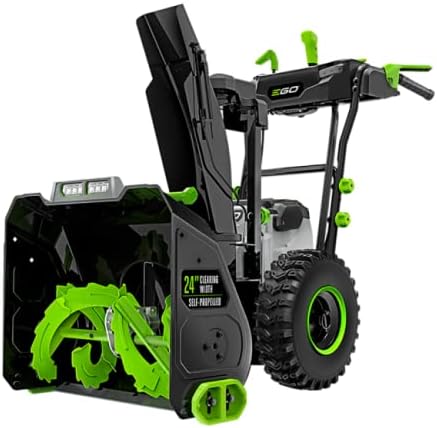
- BCGarden Score-
BCGarden scores from 0 to 10 are automatically scored by our AI consumer report tool based upon the data collected. This score has no relationship or impact from any manufacturer or sales agent websites. Learn more
- BrandEGO Power+
Last update on 2026-11-19 / Affiliate links / Images, Product Titles, and Product Highlights from Amazon Product Advertising API
The width suits a wide band of homes. These three buyers define it best.
Two Car Driveway Owners in the Snow Belt
A driveway about 16 to 18 feet wide is the natural home of this class: roughly eight passes with a small overlap clears it, apron included. Owners who see several storms a season, with falls regularly over about 6 inches, get full value from a two stage machine at this width. If your snow is mostly light dustings under a few inches, a smaller single stage unit clears faster and stores easier, and the honest move is to size down rather than buy capacity you will not use.
Households With Limited Garage Storage
Storage is where wider machines fail quietly. A 24 inch blower rolls through a standard side door, turns in the gap between two parked cars, and parks in a footprint not much larger than a mower. Measure the storage spot before you shop: the housing is 24 inches wide, but handles, chute, and controls add inches, and the machine needs a path out that does not start with moving a car in a storm. Renters and townhouse owners with a single garage bay live or die by this check.
Owners of Sloped or Gravel Driveways
Slopes and gravel both punish the wrong machine. On a slope you want a self propelled drive with real tire tread doing the pushing, not your shoulders. On gravel you want adjustable skid shoes that hold the scraper bar above the stones, so the auger throws snow instead of a spray of rock. A 24 inch two stage gives you both at a weight you can still wrestle back up the drive when the storm turns to ice underneath.
What the 24 Inch Width Changes
Width sets pass count, turning effort, and storage size all at once. Each pass clears 24 inches minus a small overlap, so driveway math is simple: divide your width in inches by about 22 to estimate passes. The same width slips through most gates of about 36 inches, which matters when the machine must reach a back patio or a side path. Wider classes cut a pass or two and then spend the savings in storage pain and gate failures. At 24 inches the balance lands where most suburban lots live.
Stage Type and Engine Size at This Size
Nearly every gas model at this width follows the layout described in our guide to the best two stage snow blower: an auger gathers snow and a separate impeller throws it, which is what lets the class handle deep and wet snow. Engines commonly fall around 200 to 250 cc, enough to keep the impeller fed at full width in heavy snow. Single stage models at 24 inches exist but suit light, dry falls only. If your storms arrive wet off a lake or the coast, stay with two stage and the upper half of the engine range.
Intake Height and Drift Handling
The housing mouth on this class stands about 20 to 21 inches tall, which swallows an average storm in one pass. Snow deeper than the intake is not a deal breaker: take a half width pass to shave the drift down, then a full pass at ground level, and add drift cutter bars if your plow leaves a wall at the apron. What intake height really buys is dignity in the morning after a big storm, when shallower machines force you to knock every drift down by hand first.
Tires, Drive Speeds, and Steering Help
Deep lug tires in the range of about 13 to 15 inches grip packed snow and climb the apron ridge without chains in most conditions. Multiple forward speeds plus reverse matter more than top speed: a slow low gear chews through the plow pile while a fast gear walks the machine back to the garage. Premium models add trigger steering that frees one wheel for easy turns at the end of each pass, and on a long driveway that feature saves real arm fatigue by the last row.
Chute Control and Throwing Distance
You will aim the chute dozens of times per storm, so the control belongs at the handle, not on the chute itself. Look for rotation and deflector adjustment you can work with mittens on, through a full swing to both sides. Makers quote throwing distances up to about 30 to 40 feet in dry snow; treat that as a best case, because wet snow and headwinds cut it hard. The practical test is whether the machine places snow clear of the next pass and off the neighbor’s walk from the middle of your own driveway.
Before falling for a spec sheet, measure three openings: the gate or door the blower passes through, the storage footprint with the handles folded or fixed, and the narrowest point of the driveway run. A machine that fits all three will be used happily for a decade. One that fails the storage check becomes a tarp sculpture that rusts beside the house.
Buyers short on storage or done with gas upkeep should also weigh the new battery two stage models at this width, covered in our guide to the best battery snow blower: they store compactly, start instantly, and clear moderate storms well, with runtime per charge as the honest limit. For short drives with light snow only, the class in our best electric snow blower guide tops out smaller and lighter, and can be the right tool at a fraction of the price.
Entry two stage models at this width run about $600 to $900, with steel chutes sometimes swapped for polymer and steering help absent. The middle band, about $900 to $1,300, adds trigger steering, heated grips, better tires, and stronger engines, and it is where most snow belt buyers should land. Premium gas and battery two stage models run about $1,300 to $2,000, buying the largest engines, electric chute controls, and in the battery case, the packs to finish a driveway. Chute material and steering are the two upgrades owners feel every storm.
- Buying before measuring the storage door, so the new machine spends winter outside under a tarp, rusting at every cable and joint.
- Clearing a clogged chute with a hand, the single most dangerous habit in snow blowing; always stop the engine and use the clean out tool.
- Running the engine inside a closed garage to warm it up, which fills the space with carbon monoxide that no one smells coming.
- Aiming the chute at the street or a neighbor’s walk, so the plow pushes your snow back or your neighbor returns it with interest.
- Storing the blower in spring with untreated fuel, which gums the carburetor over summer and guarantees a no start in the first December storm.
End the season by draining the fuel or running the tank dry with stabilizer, then fog the cylinder if the manual calls for it. Keep spare shear pins taped to the handle, because the pin that breaks on a hidden newspaper is designed to fail, and the job stops until it is replaced. Grease the chute ring so rotation stays easy, check skid shoes and the scraper bar for wear each fall, since gravel driveways eat both, and wipe the housing dry after storms. Store the machine under cover with tires at pressure, and it will start its tenth winter like its second.
What size driveway is a 24 inch snow blower made for?
The classic fit is a two car driveway about 16 to 18 feet wide and up to roughly 60 feet long, cleared in about eight passes. Longer driveways still work, but pass time adds up and a wider machine starts to earn its storage cost. Short single driveways can size down a class. The width also suits the sidewalks and aprons that come with a suburban lot, so one machine covers the whole job.
Can a 24 inch snow blower handle snow deeper than its intake height?
Yes, with technique. Take a first pass at half width to cut the drift down to housing height, then a full pass to clear the base, and let drift cutters slice the top layer forward on plow piles. Deep snow slows the pace and asks more of the engine, so work at the low gear and listen: a laboring engine means the bites are too big.
Will a 24 inch snow blower fit through a backyard gate?
Usually, yes. Most residential gates open about 36 inches wide, and the housing needs only its own 24 inches plus a margin for the chute control at your side. Measure the gate at its narrowest, including latch hardware, and measure the machine at its widest point rather than trusting the class name, because controls and tires vary by model. If the fit is within an inch, plan to fold or remove nothing; walk it through slowly on a dry day first.
How far does a 24 inch snow blower throw snow?
Maker ratings for this class run up to about 30 to 40 feet in light, dry snow with the chute set high. Real storms pay less: wet snow, wind, and a half clogged chute can halve the distance. Placement matters more than distance anyway. A machine that lands snow neatly on the far lawn edge at 20 feet beats one that sprays 35 feet across the part of the driveway you have not cleared yet.
Is gas or battery better in a 24 inch snow blower?
Gas still wins on runtime and deep snow stamina, clearing a long driveway through a major storm without a pause. Battery wins on storage, starting, noise, and upkeep, and covers moderate storms on standard lots with a pack swap. The deciding facts are your driveway length, your typical storm depth, and whether you have indoor storage near an outlet for charging. Answer those honestly and the choice makes itself.
Measure your driveway, your gate, and your garage, and the 24 inch class will tell you quickly whether it is your size. Demand a two stage layout, an engine from the upper half of the range for wet snow country, and chute controls you can work in mittens. Use the product table above to compare intake heights, tires, and steering features side by side. Chosen that way, the best 24 inch snow blower stops being a winter gamble and becomes the most welcome sound on the street.

Best Golf Course Mowers: Every Type Explained Side by Side for 2026

Best 28 Inch Snow Blower for 2026: The Two Car Driveway Sweet Spot

Best Chainsaw for Homeowners in 2026: Sizes, Power, and Safety

Best High Lift Blades for Zero Turn Mowers Made Simple: A Clear Buying Guide

Best Compact Snow Blower for Small Driveways and Tight Storage (2026)

Best 12 Inch Chainsaw for 2026: Small Bar, Serious Garden Pruning
Best Corded Leaf Blower Models for 2026: Power, Reach, and Care

Best Gas Tillers in 2026: Power for New Ground and Big Beds








