Best Bird Feeders: A Buying Guide for Every Backyard
Hanging up a feeder sounds simple until the seed turns to mush after one rainstorm, squirrels empty it in an afternoon, or the birds you actually wanted never show up. The best bird feeders match their design to the birds you want to attract and hold up to weeks of weather without turning into a maintenance chore. This guide breaks down the feeder styles that matter, how squirrel-resistant designs actually work, and what separates a feeder that lasts years from one that cracks by spring.
Compare Products

- BCGarden Score9.2
BCGarden scores from 0 to 10 are automatically scored by our AI consumer report tool based upon the data collected. This score has no relationship or impact from any manufacturer or sales agent websites. Learn more
- BrandN/A

- BCGarden Score8.8
BCGarden scores from 0 to 10 are automatically scored by our AI consumer report tool based upon the data collected. This score has no relationship or impact from any manufacturer or sales agent websites. Learn more
- BrandN/A

- BCGarden Score9.4
BCGarden scores from 0 to 10 are automatically scored by our AI consumer report tool based upon the data collected. This score has no relationship or impact from any manufacturer or sales agent websites. Learn more
- BrandBrome

- BCGarden Score8.6
BCGarden scores from 0 to 10 are automatically scored by our AI consumer report tool based upon the data collected. This score has no relationship or impact from any manufacturer or sales agent websites. Learn more
- BrandN/A

- BCGarden Score9.0
BCGarden scores from 0 to 10 are automatically scored by our AI consumer report tool based upon the data collected. This score has no relationship or impact from any manufacturer or sales agent websites. Learn more
- BrandN/A

- BCGarden Score9.2
BCGarden scores from 0 to 10 are automatically scored by our AI consumer report tool based upon the data collected. This score has no relationship or impact from any manufacturer or sales agent websites. Learn more
- BrandN/A
- BCGarden Score8.4
BCGarden scores from 0 to 10 are automatically scored by our AI consumer report tool based upon the data collected. This score has no relationship or impact from any manufacturer or sales agent websites. Learn more
- BrandN/A

- BCGarden Score9.4
BCGarden scores from 0 to 10 are automatically scored by our AI consumer report tool based upon the data collected. This score has no relationship or impact from any manufacturer or sales agent websites. Learn more
- BrandN/A

- BCGarden Score8.4
BCGarden scores from 0 to 10 are automatically scored by our AI consumer report tool based upon the data collected. This score has no relationship or impact from any manufacturer or sales agent websites. Learn more
- BrandBirdream

Glass Hummingbird Feeder for Outdoors Hanging, 26 fl oz Bird
- BCGarden Score9.4
BCGarden scores from 0 to 10 are automatically scored by our AI consumer report tool based upon the data collected. This score has no relationship or impact from any manufacturer or sales agent websites. Learn more
- BrandGrete Gotye

Youvip Metal Roof Bird Feeder - Chew Proof for Outdoor
- BCGarden Score9.0
BCGarden scores from 0 to 10 are automatically scored by our AI consumer report tool based upon the data collected. This score has no relationship or impact from any manufacturer or sales agent websites. Learn more
- BrandYouvip
Last update on 2026-10-05 / Affiliate links / Images, Product Titles, and Product Highlights from Amazon Product Advertising API
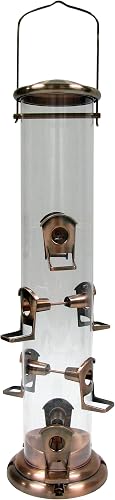
Tube feeders use a narrow cylinder with multiple feeding ports and perches, and they work well for finches, chickadees, and other small songbirds since the enclosed design keeps seed dry and limits access for larger, more aggressive birds.
Platform and tray feeders are open trays that attract the widest range of species, including ground feeders like doves and juncos, but they offer no weather protection and seed can spoil quickly if it sits wet.
House-style feeders use a small roofed structure to hold a larger seed volume and shield it from rain, which cuts down on refill trips, though the larger capacity also tends to draw more squirrel attention.
Window feeders attach directly to glass with suction cups, giving close-up views of finches and chickadees, but they typically need daily seed top-offs since their capacity is small.
Matching Style to Your Yard
A small balcony or apartment window setup favors a window feeder, while a yard with an established squirrel population usually calls for a caged or weight-triggered design regardless of which base style you start with.
No feeder is completely squirrel-proof, but three mechanisms genuinely cut down on raids. A dome or cone-shaped baffle mounted above or below the feeder has a slippery surface that squirrels cannot grip, and it works whether the feeder hangs from a branch or sits on a pole.
Wire cage feeders surround the seed ports with a metal grid sized so small birds slip through easily while squirrels and larger nuisance birds cannot reach the seed at all.
Weight-triggered feeders use a spring-loaded perch or shroud that closes the feeding ports the moment something heavier than a songbird lands on it, and this style also happens to block larger birds like grackles that would otherwise dominate a feeder.
Combining a baffle with pole placement at least several feet from anything a squirrel could jump from typically stops the majority of raids, even without a specialized cage or weight mechanism.
Metal feeders, usually powder-coated steel or aluminum, resist chewing and hold up to years of sun and rain without becoming brittle, though they cost more upfront than plastic options.
Polycarbonate plastic is common on tube feeders because it is lightweight and lets you see the remaining seed level, but cheaper plastic blends can turn brittle and crack after a season or two of UV exposure.
Cedar and other weather-resistant woods look attractive on house-style feeders and resist rot reasonably well, though they need more frequent cleaning since the porous surface can trap moisture and mold.
Checking that seed ports have smooth, fully-formed edges matters more than it sounds, since sharp or incompletely molded plastic edges on cheaply made feeders have been known to injure birds' beaks and tongues.
Positioning a feeder either within about three feet of a window or beyond about ten feet reduces fatal window strikes, since birds startled from a closer feeder don't build up enough speed to cause serious injury, while birds at a greater distance have room to see and avoid the glass.
Keeping feeders away from dense shrubs or ledges that give cats a hidden ambush point protects visiting birds without requiring any change to the feeder itself.
Placing the feeder somewhere you can reach for refilling and cleaning without wrestling with a ladder or precarious pole matters more once you're doing it weekly rather than the day you install it.
Wet seed left sitting in a feeder grows mold within days, and moldy seed can spread illness among the birds that share a feeding station, so a feeder with drainage holes or a sloped base that sheds water matters as much as its capacity.
A feeder that fully disassembles for cleaning, rather than one with fixed internal parts, makes a real difference once you're scrubbing it every couple of weeks with warm soapy water or a diluted vinegar rinse.
Emptying and rinsing a feeder after heavy rain, rather than waiting for a scheduled cleaning, prevents the wet-seed situation from ever setting in to begin with.
How often should a bird feeder be cleaned?
Most feeders should be emptied, scrubbed, and dried at least every two weeks, or sooner after rain has gotten into the seed, since mold and bacteria build up quickly in damp conditions.
What feeder style attracts the most bird species?
Platform and tray feeders attract the widest range of species since almost any bird can land and feed, though they require more frequent attention to prevent spoiled seed.
Do squirrel-proof feeders really work?
Baffles, cages, and weight-triggered ports each meaningfully cut down on squirrel access, and combining two of these methods stops the large majority of raids, though no design is completely foolproof against a determined squirrel.
Is plastic or metal better for a bird feeder?
Metal resists chewing and UV damage better over multiple seasons, while quality polycarbonate plastic offers a good lightweight option with visible seed levels, provided it isn't a cheap, thin-walled blend prone to cracking.
Where should a bird feeder be placed relative to windows?
Either very close, within about three feet, or well beyond ten feet reduces the risk of birds striking the glass at harmful speed, while the in-between distance is the riskiest zone.
Can one feeder work for multiple bird species?
Yes, though a single style tends to favor certain birds. Running a tube feeder alongside a platform feeder covers a broader mix of species than relying on just one design.
What causes a bird feeder to attract fewer birds over time?
Old, wet, or moldy seed is the most common cause, along with a feeder placed too close to predator cover or in a spot with little natural shelter nearby for birds to retreat to between visits.
The right feeder comes down to matching the style to the birds you actually want to see and being honest about how much maintenance you're willing to keep up with. Among the best bird feeders, a well-placed tube or caged feeder with a working baffle solves most of the common frustrations, from squirrel raids to soggy seed, without turning bird feeding into a weekly project.


Best Amaryllis Bulb Kits: What to Buy and What to Skip

The Best Gardening Kits for Kids: Buying Guide & Top Picks

Best Garden Tote Bags: Our Top Picks and Buying Tips

Best Bonsai Tree Kits: Our Top Picks and Buying Tips

The Best Terrarium Kits: Buying Guide & Top Picks
The Best Poinsettia Planters: Buying Guide & Top Picks

Best Paperwhite Bulb Kits: Our Top Picks and Buying Tips

The Best Christmas Cactus Plants: Buying Guide & Top Picks