Best Portable Generators: A First Time Buyer's Guide for 2026
A portable generator keeps the lights on during storms, runs power tools where there is no outlet and powers an RV or campsite for the weekend. For homeowners with big yards, outbuildings and gardens, it can also keep a well pump, freezer or greenhouse heater running when the grid goes down.
If you are shopping for the best portable generators for the first time, the terms can be confusing: running watts, surge watts, inverter, dual fuel, transfer switch and THD all show up on spec sheets. This guide starts with the basics, explains each spec in plain English, lists the rookie mistakes that cause problems and walks you through safe setup.
By the end you will know what size and type of generator fits your needs. The product table above lists current options and prices.
Compare Products

- BCGarden Score8.6
BCGarden scores from 0 to 10 are automatically scored by our AI consumer report tool based upon the data collected. This score has no relationship or impact from any manufacturer or sales agent websites. Learn more
- BrandChampion Power Equipment

DuroMax XP13000HX 13,000-Watt Dual Fuel Portable Generator - Gas &
- BCGarden Score9.0
BCGarden scores from 0 to 10 are automatically scored by our AI consumer report tool based upon the data collected. This score has no relationship or impact from any manufacturer or sales agent websites. Learn more
- BrandDuroMax

Generac 12,500 Starting Watt Tri-Fuel Portable Generator, Electric Start
- BCGarden Score8.8
BCGarden scores from 0 to 10 are automatically scored by our AI consumer report tool based upon the data collected. This score has no relationship or impact from any manufacturer or sales agent websites. Learn more
- BrandGenerac

DuroStar DS13000MXT 13,000-Watt 500cc Tri Fuel Portable Generator - Gas,
- BCGarden Score8.8
BCGarden scores from 0 to 10 are automatically scored by our AI consumer report tool based upon the data collected. This score has no relationship or impact from any manufacturer or sales agent websites. Learn more
- BrandDuroStar

- BCGarden Score8.6
BCGarden scores from 0 to 10 are automatically scored by our AI consumer report tool based upon the data collected. This score has no relationship or impact from any manufacturer or sales agent websites. Learn more
- BrandGenerac

WEN 11,000-Watt 120V/240V Dual Fuel Portable Generator with Wheel Kit
- BCGarden Score9.2
BCGarden scores from 0 to 10 are automatically scored by our AI consumer report tool based upon the data collected. This score has no relationship or impact from any manufacturer or sales agent websites. Learn more
- BrandWEN
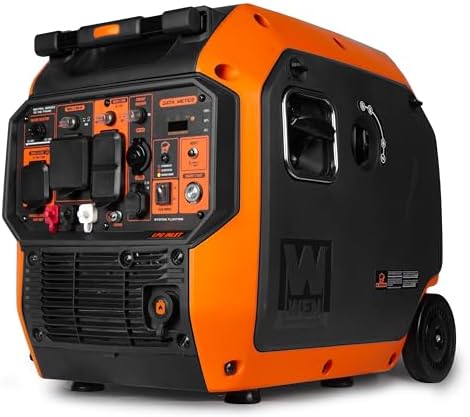
WEN 6800-Watt Dual Fuel RV-Ready Electric Start Portable Inverter Generator
- BCGarden Score8.8
BCGarden scores from 0 to 10 are automatically scored by our AI consumer report tool based upon the data collected. This score has no relationship or impact from any manufacturer or sales agent websites. Learn more
- BrandWEN

Champion 4000-Watt Dual Fuel RV Ready Portable Inverter Generator
- BCGarden Score9.2
BCGarden scores from 0 to 10 are automatically scored by our AI consumer report tool based upon the data collected. This score has no relationship or impact from any manufacturer or sales agent websites. Learn more
- BrandChampion Power Equipment

Westinghouse 6500 Watt Dual Fuel Home Backup Portable Generator, Transfer
- BCGarden Score9.0
BCGarden scores from 0 to 10 are automatically scored by our AI consumer report tool based upon the data collected. This score has no relationship or impact from any manufacturer or sales agent websites. Learn more
- BrandWestinghouse

WEN Quiet and Lightweight 4800-Watt RV-Ready Portable Inverter Generator with
- BCGarden Score8.8
BCGarden scores from 0 to 10 are automatically scored by our AI consumer report tool based upon the data collected. This score has no relationship or impact from any manufacturer or sales agent websites. Learn more
- BrandWEN

ERAYAK 4500W Dual-Fuel Portable Inverter Generator for Home Use, Camping
- BCGarden Score8.0
BCGarden scores from 0 to 10 are automatically scored by our AI consumer report tool based upon the data collected. This score has no relationship or impact from any manufacturer or sales agent websites. Learn more
- BrandERAYAK
Last update on 2026-10-13 / Affiliate links / Images, Product Titles, and Product Highlights from Amazon Product Advertising API
For a first generator, match the size to your heaviest use: a compact inverter for camping and essentials, a midsize dual fuel inverter for RVs and partial home backup, and a large inverter for whole home circuits. These three cover each tier.
Best compact pick: the Generac 3,300 Watt Inverter, around $839, supplies 2,500 running watts with clean power under 3 percent THD and COsense carbon monoxide shutoff.
Best midsize dual fuel: the WEN 6800 Watt Dual Fuel Inverter, around $798, delivers 5,100 running watts on gasoline or 4,500 on propane, with L14-30R and RV ready TT-30R outlets.
Best for home backup: the Champion 11,000 Watt Remote Start Inverter, around $1,899, offers 9,000 running watts, up to 15 hours per tank and a wireless key fob start.
A portable generator is a gasoline, propane or dual fuel engine connected to an alternator that produces electricity. You plug appliances directly into the generator's outlets or connect it to your home through a transfer switch or interlock kit installed by an electrician.
There are two main designs. Conventional portable generators run the engine at a constant speed and are the most affordable way to get high wattage. Inverter generators convert the power electronically, producing clean, stable electricity that is safe for laptops and other sensitive electronics. They also throttle the engine up and down with demand, which makes them quieter and more fuel efficient.
Generators are rated in watts. Running watts are what the generator can supply continuously, and starting or surge watts are the short burst it can provide when motors start. Matching these numbers to your appliances is the most important part of choosing a generator.
The specs that matter most are size and portability, generator type, safety features, fuel type, home connection and wattage. Here is what each means and what to choose.
Measuring for Size and Portability
Portable generators range from compact units around 40 to 60 pounds to large models over 200 pounds. Small inverter generators around 2,000 to 3,500 watts can usually be carried by one person and fit in a car trunk. Larger generators above about 5,000 watts need wheel kits and a telescoping handle and are moved more like a wheelbarrow. Measure where you will store the generator and where you will run it, making sure there is a level, dry spot at least 20 feet from the house.
Generator Type (Portable, Inverter, Standby, Solar Power Station)
Conventional portable generators offer the most watts per dollar but are louder and less fuel efficient. Inverter generators provide clean power with less than 3 percent total harmonic distortion (THD) and run quieter, often in the 50 to 65 dBA range. Standby generators are permanently installed and start automatically, but they cost far more and require professional installation. Solar power stations are quiet battery units that recharge from solar panels; they suit small loads and indoor use but cannot match a fuel generator for long outages or large appliances.
Portability and Safety Features
Look for wheels, a folding or telescoping handle and lift points if you will move the generator often. Safety features matter even more. A carbon monoxide (CO) shutoff sensor, sold under names such as CO Watchdog or COsense, turns the generator off if dangerous CO levels build up nearby. Low oil shutoff protects the engine, and covered outlets and circuit breakers protect against overloads. Electric or remote start makes larger generators much easier to use.
Fuel Type (Gasoline, Propane, Dual Fuel, Natural Gas, Solar)
Gasoline is easy to find and gives the most power but goes stale in storage without stabilizer. Propane stores indefinitely and burns cleaner, though it produces slightly less power. Dual fuel generators run on either gasoline or propane, giving flexibility during long outages when fuel stations may be closed. Tri fuel models add natural gas, which requires a connection to a gas line. Solar power stations use no fuel but depend on sunlight and battery size.
Transfer Switch and Home Connection
To power household circuits directly, a generator must connect through a transfer switch or an interlock kit, installed by a licensed electrician. This prevents dangerous backfeeding onto utility lines, which can injure line workers. Generators described as transfer switch ready usually have a 30 amp L14-30R or 50 amp 14-50R outlet. Without a transfer switch, plug appliances directly into the generator with heavy duty outdoor extension cords.
Wattage: Running vs Starting Watts
Add up the running watts of everything you want to power at the same time, then add the highest starting wattage of any single motor driven appliance. A refrigerator might need about 700 running watts and 2,200 starting watts, a sump pump around 800 running and 1,300 starting watts, and lights only a few watts each with LED bulbs. Generators around 3,000 to 4,000 running watts handle essentials such as a fridge, lights and phone charging. Around 7,000 to 9,000 running watts can cover much of a home through a transfer switch, including a well pump or window AC.
These are the mistakes first time owners make most often.
- Running a generator indoors or in a garage. Generators produce carbon monoxide, which can kill within minutes. Always run them outdoors, at least 20 feet from doors and windows.
- Undersizing the generator. Forgetting starting watts leads to tripped breakers when the fridge or pump kicks on.
- Backfeeding through a dryer outlet. Plugging a generator into a wall outlet is dangerous and illegal; use a transfer switch.
- Storing gasoline untreated. Stale fuel gums up carburetors; add stabilizer or run the carburetor dry.
- Using thin extension cords. Undersized cords overheat; choose outdoor rated cords sized for the load.
A careful first start sets your generator up for a long life.
- Read the manual and install the wheel kit and handle if included.
- Add the correct engine oil, which many generators ship without, then add fresh fuel or connect a propane tank.
- Place the generator outdoors on level ground, at least 20 feet from the house with the exhaust pointed away from doors and windows.
- Start the generator without any load and let it warm up for a few minutes.
- Plug in appliances one at a time, starting with the largest motor load.
- Run the generator under a light load for the first few hours if the manual recommends a break in period, and change the oil after the first 20 to 30 hours.
Store fuel safely and keep a CO alarm inside your home. Gardeners who need quiet power for small tools can also compare portable solar power generators.
Use this quick guide to match generator size to your needs:
- 2,000 to 3,500 watts: camping, tailgating, small power tools and essentials such as a fridge, lights and phone chargers. Compact inverter generators such as the Generac 3,300 watt inverter, with 2,500 running watts, fit here.
- 4,000 to 6,000 watts: RVs with one air conditioner, a fridge plus freezer and sump pump, and most yard and workshop tools. Many dual fuel inverter models in this range have RV ready TT-30R outlets.
- 7,000 to 12,000 watts: home backup through a transfer switch, including well pumps, furnaces and some central air systems. Large dual or tri fuel inverter generators reach 9,000 running watts or more.
A wattage worksheet takes ten minutes and prevents buying the wrong size. Write down every item you want to run during an outage, then note its running and starting watts from the label or manual. Typical figures look like this:
| Appliance | Running Watts | Starting Watts |
|---|---|---|
| Refrigerator | about 700 | about 2,200 |
| Chest freezer | about 500 | about 1,500 |
| Sump pump (1/2 hp) | about 1,050 | about 2,150 |
| Well pump (1/2 hp) | about 1,000 | about 2,100 |
| Furnace fan (1/2 hp) | about 875 | about 2,350 |
| Window AC (10,000 BTU) | about 1,200 | about 3,600 |
| Microwave | about 1,000 | none |
| LED lights, router, phone chargers | about 100 to 200 | none |
Total the running watts, then add only the single highest starting figure, because motors rarely start at the same instant. A fridge, freezer, sump pump and lights total about 2,400 running watts; adding the sump pump's extra starting surge brings the peak to roughly 3,500 watts. Add a 20 percent cushion and you know a generator with around 3,000 running and 4,000 starting watts fits.
Inverter generators are the quietest option, often around 50 to 60 dBA at 23 feet, which is about the level of normal conversation. Conventional open frame generators commonly run 70 dBA or louder, similar to a vacuum cleaner. Many campgrounds and some neighborhoods set quiet hours or noise limits, so check before you buy for camping or tailgating.
Where you place the generator matters as much as how loud it is. Keep it at least 20 feet from the house, never in a garage, shed or under a closed porch, and point the exhaust away from windows, doors and vents. In rain or snow, use a generator tent or cover rated for running units, since wet outlets are a shock hazard. A transfer switch for generators lets you leave the unit in a safe spot outside and still power indoor circuits.
Plan fuel for at least three days of outages. A mid size generator at half load burns roughly 0.5 to 0.75 gallons of gasoline per hour, so 24 hours of use can take 12 to 18 gallons. Store gasoline in approved cans with fuel stabilizer and rotate it every few months, or keep 20 pound propane tanks, which store for years.
Regular care keeps the engine ready when you need it:
- Monthly: start the generator and run it under a light load for 15 to 20 minutes.
- Every 50 to 100 hours: change the oil, or sooner in dusty or hot conditions.
- Every season: clean or replace the air filter and check the spark plug.
- Before storage: stabilize the fuel or run the carburetor dry, and keep the unit covered in a dry place.
These are the questions first time buyers ask most.
What size generator do I need to power a house?
Most homes need around 5,000 to 7,500 running watts to power essentials such as a refrigerator, freezer, sump pump, furnace fan, lights and electronics. Powering central air, an electric water heater or an electric range may require 10,000 watts or more. Add up the running watts of your must have appliances, then add the largest starting wattage to size your generator.
Can a generator run a refrigerator?
Yes, most portable generators of about 2,000 watts or more can run a standard refrigerator. A typical fridge uses roughly 600 to 800 running watts but needs 1,500 to 2,200 watts for a few seconds when the compressor starts. Choose a generator with enough starting watts and avoid starting other large loads at the same moment.
Inverter or conventional: which is better?
Inverter generators are better for most homeowners and campers because they produce clean power safe for electronics, run quieter and use less fuel. Conventional generators are better when you need the most watts for the lowest price, such as for construction tools or large backup loads on a tight budget.
Do I need a transfer switch?
You need a transfer switch or interlock kit if you want to power hardwired circuits such as a furnace, well pump or ceiling lights. It keeps power from backfeeding onto utility lines and makes switching over safe and simple. If you only plug a few appliances directly into the generator, extension cords are enough.
How long can a portable generator run continuously?
Most portable generators run about 8 to 18 hours on a full tank at a 25 to 50 percent load, depending on tank size and efficiency. Some quiet inverter models list up to 18 hours on a 3.4 gallon tank in economy mode. Propane connected to a large tank can run longer, but stop every 24 hours or so to check oil and let the engine cool.
The three things that matter most are enough running and starting watts, a fuel type that suits your storage and outages and safety features such as CO shutoff. Campers and light users should choose a compact inverter generator, RV owners and most homeowners will be happy with a 4,000 to 6,000 watt dual fuel inverter and whole home backup calls for a large transfer switch ready model. Use this guide to choose the best portable generators, then check the product table above for current prices. Protect your investment with a generator storage enclosure.


Best Small Hedge Trimmer: What "Small" Actually Gets You
Best Electric Lawn Edger: What to Know Before You Buy

Best Electric Leaf Blower: What to Know Before You Buy
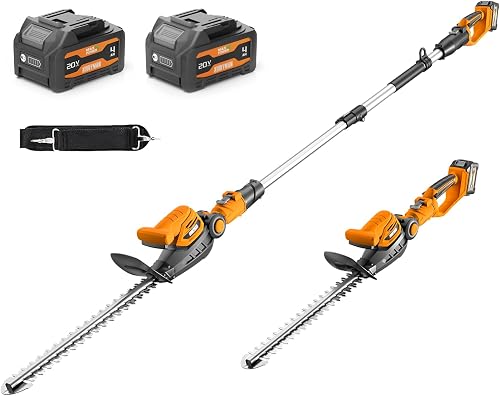
Best Handheld Hedge Trimmer: When You Don't Need a Pole

Best Manual Lawn Edger: Half-Moon vs Rotary Star Wheel Explained

Best Hedge Trimmers: What to Know Before You Buy

Best Lawn Edger: What to Know Before You Buy
Best Hedge Trimmers for Thick Branches: What to Know Before You Buy