
Best Gardening Gloves for Cactus in 2026: Keep Spines Out of Your Skin
Anyone who has repotted a barrel cactus with ordinary garden gloves remembers the lesson for days, picking spines out of their palms one by one. Cactus defense comes in two forms, long spines that stab and tiny barbed glochids that detach and itch for a week, and most gloves stop neither reliably. Choosing the best gardening gloves for cactus means matching palm material and cuff coverage to the plants you handle, then pairing the gloves with sensible technique. This guide explains what actually blocks spines, why glochids defeat many thick gloves, and how to handle spiny plants without a trip to the tweezers drawer.
The product table lists materials and coverage styles side by side. For general glove shopping beyond spiny plants, see our wider guide to the best gardening gloves for every garden task.
Compare Products

- BCGarden Score9.0
BCGarden scores from 0 to 10 are automatically scored by our AI consumer report tool based upon the data collected. This score has no relationship or impact from any manufacturer or sales agent websites. Learn more
- BrandGLOSAV
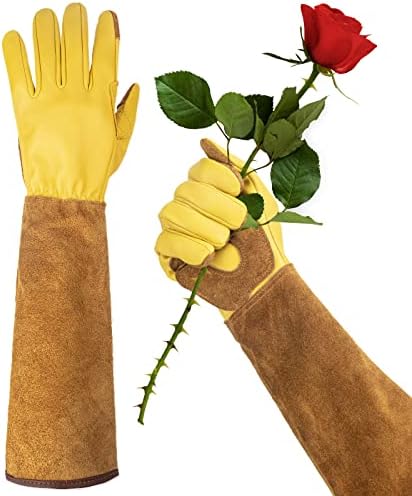
- BCGarden Score9.4
BCGarden scores from 0 to 10 are automatically scored by our AI consumer report tool based upon the data collected. This score has no relationship or impact from any manufacturer or sales agent websites. Learn more
- BrandWOHEER

- BCGarden Score9.4
BCGarden scores from 0 to 10 are automatically scored by our AI consumer report tool based upon the data collected. This score has no relationship or impact from any manufacturer or sales agent websites. Learn more
- BrandN/A

- BCGarden Score9.2
BCGarden scores from 0 to 10 are automatically scored by our AI consumer report tool based upon the data collected. This score has no relationship or impact from any manufacturer or sales agent websites. Learn more
- BrandN/A

HANDLANDY Rose Pruning Gloves for Men Women, Thorn Proof Gardening
- BCGarden Score9.2
BCGarden scores from 0 to 10 are automatically scored by our AI consumer report tool based upon the data collected. This score has no relationship or impact from any manufacturer or sales agent websites. Learn more
- BrandHANDLANDY

- BCGarden Score8.4
BCGarden scores from 0 to 10 are automatically scored by our AI consumer report tool based upon the data collected. This score has no relationship or impact from any manufacturer or sales agent websites. Learn more
- BrandN/A

- BCGarden Score9.0
BCGarden scores from 0 to 10 are automatically scored by our AI consumer report tool based upon the data collected. This score has no relationship or impact from any manufacturer or sales agent websites. Learn more
- BrandN/A

- BCGarden Score8.8
BCGarden scores from 0 to 10 are automatically scored by our AI consumer report tool based upon the data collected. This score has no relationship or impact from any manufacturer or sales agent websites. Learn more
- BrandBuleVina

- BCGarden Score8.6
BCGarden scores from 0 to 10 are automatically scored by our AI consumer report tool based upon the data collected. This score has no relationship or impact from any manufacturer or sales agent websites. Learn more
- BrandSAWIDIER

- BCGarden Score8.8
BCGarden scores from 0 to 10 are automatically scored by our AI consumer report tool based upon the data collected. This score has no relationship or impact from any manufacturer or sales agent websites. Learn more
- BrandCOOLJOB
Last update on 2026-11-25 / Affiliate links / Images, Product Titles, and Product Highlights from Amazon Product Advertising API
Cactus and Succulent Collectors Who Repot Often
Collectors handle small pots at close range, where control matters as much as armor. A mid weight leather palm glove with a snug fit gives enough protection against the spines of most potted species while still letting you feel the pot rim and soil line. This group should own one sturdy pair for repotting days and a lighter pair for grooming and inspection, and should always pair gloves with tongs or a folded paper band for the spiniest specimens.
Desert and Xeriscape Gardeners
Yards built around agave, prickly pear, yucca and ocotillo involve bigger plants, longer spines and forearms deep inside sharp crowns. Gauntlet gloves that cover to the elbow are the right call here, because the worst sticks happen when you reach past a spine cluster you already cleared. Tough cowhide or goatskin gauntlets, plus long sleeves, turn pruning a prickly pear from a blood sport into routine maintenance.
Gardeners Clearing Spiny Volunteers and Storm Debris
After storms or during a yard cleanout, you may grab pads and branches without inspecting every spine first. This is heavy, fast work, and it calls for the thickest palms you can stand, worn over the top of whatever the day throws at you. Choose durability over dexterity, work with loppers and a rake where possible, and let tools touch the plant before your hands do.
Palm Material: Goatskin, Cowhide and Synthetics
Leather remains the spine blocking standard because its dense fiber mat deflects and traps points that would slide through woven fabric. Goatskin is thinner and more supple, with a natural grain that resists punctures surprisingly well for its weight, making it the favorite for repotting and careful work. Cowhide is thicker and tougher for heavy clearing but stiffer on the hand. Our guide to the best leather gardening gloves compares hides and care in detail. Synthetic puncture resistant fabrics exist, but many rely on tight weaves that glochids still penetrate, so treat leather as the benchmark.
Gauntlet Length and Forearm Coverage
Standard gloves end at the wrist, exactly where cactus work gets dangerous, because wrists and forearms brush spines every time you reach into a plant. Gauntlet styles extend protection partway or fully to the elbow and are worth the extra warmth for agave, prickly pear and rose work alike. The cuff should flare enough to go over your sleeve, sealing the gap where a detached spine would otherwise fall in and ride against your skin all afternoon.
The Glochid Problem
Glochids are the tiny barbed bristles on prickly pear pads and many other cacti, and they behave differently from spines: they detach at a touch, work through loose knits and mesh backs, and embed by the dozen. Smooth, tight surfaces resist them best, which is another point for solid leather palms and backs. Mesh backed summer gloves, however breathable, are a poor choice around glochid bearing plants. Even the best glove is only partial glochid defense, so technique in the next section matters as much as the glove itself.
Fit and Dexterity
A glove that is too large folds at the palm, and a fold is where a spine finds the thin spot and your grip slips on a heavy pot. Too small, and the leather pulls taut and splits at the seams under load. Measure your hand and buy your true size; leather gives slightly with wear and molds to you. Gardeners with smaller hands often do better in ranges cut for them, which our guide to the best gardening gloves for women covers, while larger hands should look at the extended sizes in our guide to the best gardening gloves for men rather than squeezing into a standard large.
Seams, Cuffs and Closures
Check where the seams sit: seams across the palm and fingertips are weak lines that spines find and that wear out first. Reinforced fingertips and a palm patch add life where the grip works hardest. An elasticated or adjustable wrist closure under the gauntlet keeps soil and detached spines from migrating inside the glove. After a session, turn gloves partway inside out and shake them out outdoors, because yesterday's glochids love to introduce themselves to today's hands.
Experienced cactus growers treat gloves as the last line, not the only line. Use kitchen tongs, long tweezers or a folded band of newspaper or cardboard around a pot or pad to do the actual gripping, keeping your hands a few inches from the spines. Work slowly and lift plants from below rather than grabbing crowns. If spines or glochids do get into your skin, wash the area and remove what you can with clean tweezers or tape. A spine that is deep, near a joint or the eye, or a spot that keeps getting worse should be looked at by a doctor rather than dug out at home.
Under $10 buys light fabric or thin synthetic gloves that are fine for gentle succulents but not honest spine protection. From about $10 to $20, real leather palm work gloves appear and handle most home cactus tasks. From about $20 to $30 and a little above, you get full gauntlet coverage in goatskin or cowhide, the tier serious desert gardeners live in. Given how long a good leather pair lasts, the gauntlet tier is cheap insurance against a miserable, tweezering week.
- Grabbing a prickly pear pad bare handed above the glove line, trusting a wrist length glove to protect your forearm.
- Wearing mesh backed summer gloves around glochid bearing cacti, then wondering why your knuckles itch for days.
- Storing gloves unshaken, so detached spines wait inside the fingers for your next session.
- Digging at a deep spine with a pin instead of having a doctor look at it.
- Ignoring a puncture that keeps getting worse after two days, when it needed a doctor rather than patience.
Shake and brush gloves out after every use, outdoors, and inspect the palms for embedded spines before they work deeper into the leather. Clean leather gloves by wiping with a damp cloth and mild soap, then air dry them away from direct heat, which cracks leather. A light leather conditioner a few times a year keeps the hide supple and puncture resistant; dried out leather stiffens and splits at the flex points. Store gloves flat or clipped together in a dry spot, not crushed at the bottom of a tool bucket where spines and moisture collect.
What should I look for in gardening gloves for cactus?
Look for a solid leather palm, coverage that matches your plants, and a true fit without folds. Goatskin suits careful repotting, cowhide suits heavy clearing, and gauntlet cuffs protect forearms on large spiny plants. Avoid loose knits and mesh backs around spiny species. Remember that gloves are one layer of a system that should also include tongs or a paper band for the worst spines.
Can gloves stop glochids completely?
No glove stops them completely. Glochids are tiny, barbed and shed in clouds, and they can pass through small gaps in weaves and at the cuff. Smooth leather resists them best, and handling pads with tongs or folded cardboard keeps your hands off the worst clusters. After working with prickly pear, treat your gloves and sleeves as contaminated: shake them out outdoors and check your forearms before you touch your face.
How do you get cactus spines out of gloves?
Work outdoors in good light. Pull long spines straight out with tweezers or pliers, gripping close to the leather so they do not snap. For glochids on the surface, press sticky tape firmly over the area and peel, repeating with fresh tape. A stiff brush clears loose debris. If a glove is badly loaded with glochids after a big job, some gardeners retire it to non cactus duty rather than fight it.
How do you remove a cactus spine from skin?
For a small surface spine, clean tweezers held close to the skin are the usual tool, and tape lifts fine glochids. Wash the area afterwards. Deep spines, spines near joints or eyes, and any spot that keeps getting worse should be seen by a doctor rather than treated at home, so ask for medical advice when in doubt.
How long do leather cactus gloves last?
A good leather pair used weekly can last several years, because cactus work wears gloves slowly compared with digging or construction. Life shortens if the leather dries out and cracks, or if seams split from an overly tight fit. Conditioning the hide and drying gloves gently after wet work keeps them flexible. Retire a pair when the palm leather thins enough that you can feel a pencil point pressed through it.
Buy real leather, cover your forearms when the plants are big, and let tools do the gripping whenever spines are dense. With those habits, the best gardening gloves for cactus turn spiny chores into calm, methodical work. If a puncture keeps getting worse, ask a doctor about it. Compare palm materials, gauntlet lengths and sizes in the product table above to find your pair.

Best Gardening Gloves of 2026: A Practical Buying Guide
Best Bird Feeder for Hummingbirds: A Buying Guide for 2026

Best Garden Kneeler for Bad Knees in 2026: A Buying Guide

Best Brome Bird Feeders of 2026: Which Model Should You Buy?

Best Gardening Gloves for Roses in 2026: Thorn Protection That Still Lets You Work

Best Hardware Cloth for Raised Garden Beds: Budget, Midrange, and Premium Picks
Best Large Planters: Types Compared and How to Choose

Best Window Boxes: A Buyer's Sizing and Material Guide








