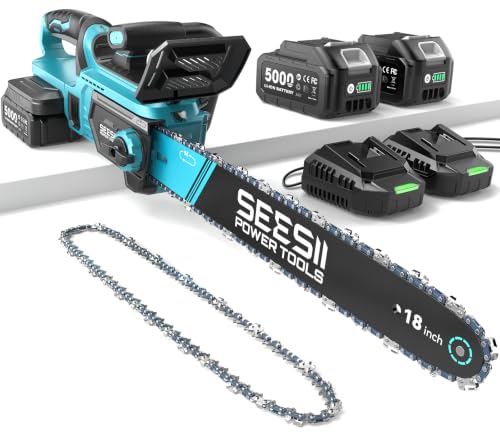
Best Battery Chainsaws (2026): A Gardener's Buying Guide
A battery chainsaw asks nothing of you before it cuts: no fuel to mix, no cord to pull, no engine to warm up. You squeeze the trigger to limb a storm damaged apple tree, section a fallen limb for firewood, or take down the overgrown shrub that a handsaw cannot handle. That convenience has made cordless saws the default choice for most home gardens. Finding the best battery chainsaw for your property comes down to bar length, battery platform, and the safety hardware that protects you while the chain is moving.
This guide walks through those decisions with a gardener's workload in mind. If you are also considering gas models, our broader guide to the best chainsaw compares every power source. The comparison table below gathers bar lengths, platforms, and weights for current cordless saws.
Compare Products

EGO POWER+ Chain Saw, 16” Battery Powered Chainsaw, Electric Cordless,
- BCGarden Score9.2
BCGarden scores from 0 to 10 are automatically scored by our AI consumer report tool based upon the data collected. This score has no relationship or impact from any manufacturer or sales agent websites. Learn more
- BrandEGO Power+

- BCGarden Score8.8
BCGarden scores from 0 to 10 are automatically scored by our AI consumer report tool based upon the data collected. This score has no relationship or impact from any manufacturer or sales agent websites. Learn more
- BrandGreenworks
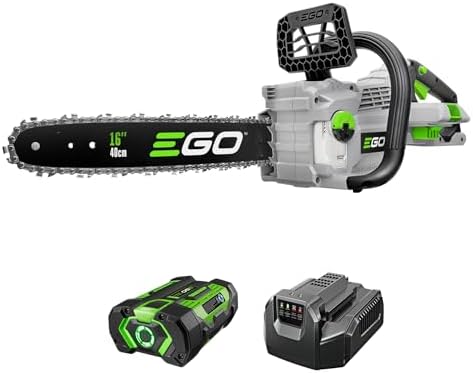
EGO POWER+ Chain Saw, 16” Battery Powered Chainsaw, Electric Cordless,
- BCGarden Score9.2
BCGarden scores from 0 to 10 are automatically scored by our AI consumer report tool based upon the data collected. This score has no relationship or impact from any manufacturer or sales agent websites. Learn more
- BrandEGO Power+

- BCGarden Score8.6
BCGarden scores from 0 to 10 are automatically scored by our AI consumer report tool based upon the data collected. This score has no relationship or impact from any manufacturer or sales agent websites. Learn more
- BrandN/A

SKIL PWR CORE 40 Brushless 40V 14” Lightweight Chainsaw Kit
- BCGarden Score8.8
BCGarden scores from 0 to 10 are automatically scored by our AI consumer report tool based upon the data collected. This score has no relationship or impact from any manufacturer or sales agent websites. Learn more
- BrandSkil

- BCGarden Score9.2
BCGarden scores from 0 to 10 are automatically scored by our AI consumer report tool based upon the data collected. This score has no relationship or impact from any manufacturer or sales agent websites. Learn more
- BrandSeesii

- BCGarden Score8.8
BCGarden scores from 0 to 10 are automatically scored by our AI consumer report tool based upon the data collected. This score has no relationship or impact from any manufacturer or sales agent websites. Learn more
- BrandDong Cheng
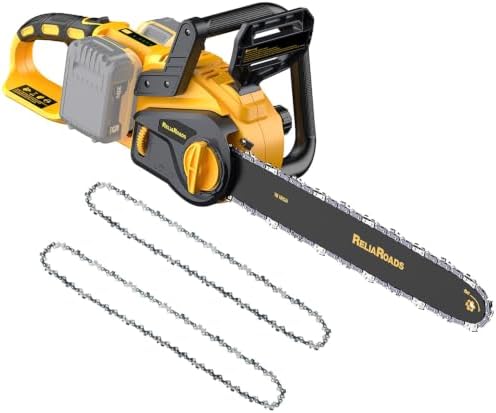
- BCGarden Score8.6
BCGarden scores from 0 to 10 are automatically scored by our AI consumer report tool based upon the data collected. This score has no relationship or impact from any manufacturer or sales agent websites. Learn more
- BrandReliaRoads

- BCGarden Score9.0
BCGarden scores from 0 to 10 are automatically scored by our AI consumer report tool based upon the data collected. This score has no relationship or impact from any manufacturer or sales agent websites. Learn more
- BrandN/A

- BCGarden Score8.4
BCGarden scores from 0 to 10 are automatically scored by our AI consumer report tool based upon the data collected. This score has no relationship or impact from any manufacturer or sales agent websites. Learn more
- BrandGreenworks
Last update on 2026-11-28 / Affiliate links / Images, Product Titles, and Product Highlights from Amazon Product Advertising API
Homeowners Pruning Trees and Clearing Storm Damage
The typical garden workload is limbs up to about 8 inches thick, fallen branches after storms, and the occasional small tree. A 14 or 16 inch bar on a mainstream battery platform covers all of it with capacity to spare. Gardeners in this group should compare with our homeowner focused guide to the best chainsaw for homeowners, and buy into the battery platform they already own for other tools whenever possible, since the packs are the expensive half of the system.
Firewood Cutters With Modest Seasonal Volume
If you buck a few cords a year from delivered logs or your own trees, choose a 16 or 18 inch bar, the largest battery your platform offers, and at least two packs. Runtime per pack in hardwood may be only a few dozen cuts, so the charger cycle becomes part of the workflow. This group feels the difference between brushed and brushless motors most, because sustained cutting under load is exactly where brushless efficiency and torque show up.
Gardeners With Light, Occasional Cutting
For pruning thick branches, cutting back overgrown shrubs, and small DIY timber jobs, a compact saw with a 10 or 12 inch bar is lighter, cheaper, and easier to control. Some gardeners go smaller still with the one hand pruning tools in our best mini chainsaw guide for branches under about 4 inches. Light saws are not toys, though: every safety rule in this article applies to them in full, because the chain does not know it is small.
Bar Length Matched to the Wood You Cut
A saw can comfortably cut wood up to about twice its bar length by working from both sides, but single pass cutting should stay a few inches under the bar length for control and chain life. A 12 inch bar suits pruning and small logs, 14 to 16 inches covers most homeowner firewood and storm work, and 18 inches serves larger logs and small tree felling. Longer bars add weight and drain batteries faster, and they tempt users into cuts beyond their skill. Choose the shortest bar that handles your regular wood, and rent a big saw for the rare oversize job.
Battery Platform, Voltage, and Amp Hours
Chainsaws are among the hungriest cordless tools, so platform choice echoes for years. Higher voltage platforms, 40 volt and above, generally deliver the torque for 16 and 18 inch bars, while 18 and 20 volt saws suit lighter bars and pruning. Amp hours decide endurance: in cutting terms, a 5 amp hour pack might make roughly 70 to 100 cuts through 6 inch pine, and far fewer through oak. If you already run a brand's blower and trimmer, its chainsaw inherits your batteries and chargers, which is worth more than a small spec advantage elsewhere.
Chain Speed and Motor Type
Chain speed, listed in meters per second or feet per minute, shapes how cleanly and quickly the saw pulls through wood. Higher chain speed cuts faster and leaves a smoother finish on pruning cuts, which helps trees heal. Brushless motors deliver that speed efficiently, adjust power to the load, and need no brush replacements. Just as important is the chain itself: most home saws use low kickback safety chain with a narrow kerf, which cuts fast on modest power and is the right choice for non professional users. Keep it that way when you buy replacement loops.
Oiler and Chain Tensioning System
The bar and chain need constant oil, and an automatic adjustable oiler is standard on worthwhile saws. A visible oil window lets you check the level at a glance, which matters because a dry chain overheats and stretches within minutes. Tensioning systems split into two camps: tool free dials that adjust by hand in seconds, and traditional stud and screw setups that need a wrench but hold settings firmly. Beginners adjust tension often as new chains stretch, so tool free systems earn their keep. Either way, the correct tension lets the chain snap back against the bar without sagging.
Weight and Balance With the Battery Fitted
Listings sometimes quote weight without the battery, which flatters the number by several pounds. Judge the saw as you will hold it: bar, chain, oil, and the largest battery you plan to use. Most homeowner battery saws land between 9 and 14 pounds ready to cut. Balance matters as much as totals; a saw that sits neutrally at the front handle tires your arms less during limbing. Remember that fatigue is a safety issue, not just comfort, because tired arms make sloppy cuts near the end of a session.
Safety Hardware: Chain Brake and Kickback Protection
A working chain brake is non negotiable. It stops the chain in a fraction of a second when the front hand guard is pushed forward by your wrist or by inertia during a kickback event. Check that it clicks on and off before every session. Low kickback chain, a chain catcher pin, and a hand guard round out the hardware. One caution from our guide to top handle chainsaws: top handle saws are built for trained climbers working inside trees, and they are harder for ground users to control with two hands, so they are not a homeowner upgrade.
Kickback happens when the upper tip of the bar, the kickback zone, touches wood and the saw rotates up toward you. Avoid that zone entirely: never cut with the tip, and keep your body out of the line of the bar. Always cut with two hands, the thumb of your front hand wrapped under the handle, and never cut above shoulder height or from a ladder, because a ladder removes your footing exactly when the saw demands it most. Wear eye and ear protection, gloves, and chainsaw chaps or trousers with cut protective fibers whenever you cut; they are inexpensive insurance. Work with a clear escape path, check for people and pets before each cut, and if you are new to chainsaws, a safety course run by a local extension office or dealer is the best money in this whole category. Remove the battery before touching the chain for any adjustment.
Under $150, expect 10 to 12 inch pruning saws and light 14 inch models, often with brushed motors and small batteries. They prune and tidy happily. About $150 to $300 is the homeowner core: 14 to 16 inch brushless saws, 4 to 5 amp hour packs, and chargers that refill in about an hour. About $300 to $500 brings 18 inch bars, the strongest platforms, and dual battery kits for real firewood volume. Above that you approach professional cordless saws, which most gardens will never justify.
- Cutting with a dull chain and pushing harder to compensate, which overheats the bar and invites loss of control.
- Letting the chain touch soil or gravel at the end of a cut, which dulls a sharp chain in a single second.
- Cutting one handed or above shoulder height to reach a branch, the two habits behind many garden chainsaw injuries.
- Running the saw with an empty oil tank, so the bar and chain cook themselves during one long session.
- Ignoring chain tension as a new chain stretches, until it derails or climbs off the bar mid cut.
- Storing batteries in a freezing or roasting shed all year, quietly shortening their working life.
Sharpen or swap the chain the moment cuts start producing dust instead of chips, and file the depth gauges as the manual directs. After each session, brush sawdust from the bar groove and oil holes, flip the bar to even the wear, and wipe the saw body before it goes back on the shelf. Top up bar oil every time you swap a battery. Store the saw with the scabbard on, the chain at proper tension, and batteries indoors at partial charge in a cool dry place. A spring check of the chain brake, oiler flow, and air intake takes five minutes and prevents most mid season failures.
Are battery chainsaws worth it for homeowners?
For the cutting most homeowners actually do, yes. They match gas saws cut for cut in wood up to about 14 inches, start instantly after months in the shed, and need a fraction of the maintenance. The limit is endurance: continuous bucking of large hardwood logs drains packs faster than chargers refill them. If your firewood habit is serious and daily, gas still has a case. For pruning, storm cleanup, and a few cords a year, battery wins on convenience.
What size battery chainsaw do I need for firewood?
Most firewood logs arrive at 12 to 16 inches across, so a 16 inch bar gives comfortable single pass cuts with room to spare. Pair it with the biggest battery your platform sells and a second pack for rotation. An 18 inch bar earns its weight only if you regularly section larger trunks. Undersizing the bar forces double cuts that waste battery and patience, while oversizing adds weight you carry through every small job too.
How long does a battery chainsaw run on one charge?
Runtime is best counted in cuts, because wood species and diameter change everything. A mid size pack typically delivers roughly 70 to 100 cuts through 6 inch softwood, and perhaps half that through seasoned oak. Pruning thin branches, the same pack may last an afternoon of intermittent work. Plan firewood sessions around two packs and a fast charger, and think of the battery gauge as a fuel gauge, not a timer.
How do you clean a battery chainsaw?
Remove the battery, then take off the side cover and brush packed sawdust from around the sprocket and oil ports. Clean the bar groove with a thin tool, wipe the chain, and check that oil flows by briefly running the saw over a light surface and looking for a faint spray line. Never wash the saw with water or solvents. A clean saw oils its chain properly, and proper oiling is most of chainsaw longevity.
When should you replace a chainsaw chain?
Replace the chain when teeth are damaged by rock or metal, when several cutters are filed much shorter than the rest, or when the chain will no longer hold an edge for a full session. Stretch that causes repeated derailing is another end of life sign. A chain is a consumable with a modest price, and forcing a worn one to keep working costs you a bar, a sprocket, and possibly your footing.
Match the bar to your wood, buy into a battery platform you will reuse, and treat the safety hardware and habits as part of the purchase, not fine print. The product table above confirms which saws balance those needs for home gardens. The best battery chainsaw for you is the one you can handle confidently at the end of a long session, and if you ever feel your skills are the weak link, pause and take a safety course before the next big job. Prices and availability can change, so check the product page before ordering.

Best Dewalt String Trimmer: Which One Suits Your Yard? (2026)

Best Budget Robot Lawn Mowers for 2026: A Gardener's Buying Guide
Best DeWalt Pole Saw for 2026: Choosing Within the Lineup

Best 18 Inch Snow Blower for 2026

Best Electric Wheelbarrows in 2026: Hauling Help for Hills and Heavy Loads

Best 24 Inch Chainsaws: A Buying Guide for 2026

Best Gas Snow Blower Models for 2026: A Garden Buyer Guide

Best 20 Inch Chainsaw Buying Guide for Gardeners (2026)