
Best 24 Inch Chainsaws: A Buying Guide for 2026
A 24 inch bar moves you out of the pruning class and into real timber work: felling medium hardwoods, breaking down storm fallen trunks, and bucking firewood rounds that smaller saws cannot cross in one pass. The best 24 inch chainsaw is a professional weight tool, and buying one well means respecting three things shoppers often gloss over: engine displacement, chain specification, and the physical cost of carrying the saw through a long cutting day.
This guide is written for experienced users who already handle smaller saws confidently. It covers the powerhead traits, bar and chain choices, and safety planning that big wood demands. The comparison table below sketches the classes before we get into specifics.
Compare Products

- BCGarden Score8.8
BCGarden scores from 0 to 10 are automatically scored by our AI consumer report tool based upon the data collected. This score has no relationship or impact from any manufacturer or sales agent websites. Learn more
- BrandHusqvarna

NEO-TEC NH872 24 Inch Gas Powered Chainsaw 71cc Gasoline Chain
- BCGarden Score8.2
BCGarden scores from 0 to 10 are automatically scored by our AI consumer report tool based upon the data collected. This score has no relationship or impact from any manufacturer or sales agent websites. Learn more
- BrandNEO-TEC
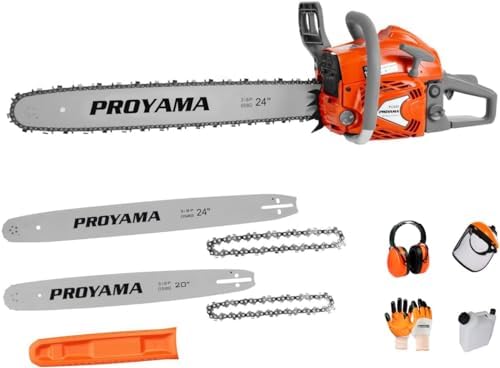
PROYAMA 68CC Gas Powered Chainsaw, 20" 24" Bar, Magnesium Alloy
- BCGarden Score8.0
BCGarden scores from 0 to 10 are automatically scored by our AI consumer report tool based upon the data collected. This score has no relationship or impact from any manufacturer or sales agent websites. Learn more
- BrandPROYAMA

- BCGarden Score9.0
BCGarden scores from 0 to 10 are automatically scored by our AI consumer report tool based upon the data collected. This score has no relationship or impact from any manufacturer or sales agent websites. Learn more
- BrandNEO-TEC

- BCGarden Score9.2
BCGarden scores from 0 to 10 are automatically scored by our AI consumer report tool based upon the data collected. This score has no relationship or impact from any manufacturer or sales agent websites. Learn more
- BrandBaococo

- BCGarden Score8.0
BCGarden scores from 0 to 10 are automatically scored by our AI consumer report tool based upon the data collected. This score has no relationship or impact from any manufacturer or sales agent websites. Learn more
- BrandN/A

- BCGarden Score7.8
BCGarden scores from 0 to 10 are automatically scored by our AI consumer report tool based upon the data collected. This score has no relationship or impact from any manufacturer or sales agent websites. Learn more
- BrandN/A

- BCGarden Score-
BCGarden scores from 0 to 10 are automatically scored by our AI consumer report tool based upon the data collected. This score has no relationship or impact from any manufacturer or sales agent websites. Learn more
- BrandN/A

- BCGarden Score-
BCGarden scores from 0 to 10 are automatically scored by our AI consumer report tool based upon the data collected. This score has no relationship or impact from any manufacturer or sales agent websites. Learn more
- BrandFARMMAC
Last update on 2026-11-27 / Affiliate links / Images, Product Titles, and Product Highlights from Amazon Product Advertising API
Rural Landowners Felling Medium Trees
If you thin woodland, clear fence lines, or take down mature trees in the 16 to 22 inch range, you need a saw in the 60 cc class with a decompression valve and a powerhead built for daily starting. Anti vibration mounts matter to you more than to anyone, because felling is repeated full throttle work and numb hands lose control of a saw. Plan your purchase around dealer support, since a saw this size earns professional servicing.
Firewood Producers Bucking Large Rounds
Heating with wood means crosscutting big rounds hour after hour, and here chain speed under load and fuel capacity decide your pace. A slightly heavier saw with a larger tank finishes a cord with fewer stops, and a full chisel chain in clean wood cuts noticeably faster than safety chain. Your second purchase should be a quality saw buck or log stand, because bucking rounds at ankle height with a long bar invites fatigue mistakes.
Experienced Users Clearing Storm Fallen Trunks
storm cleanup is the most dangerous work in this size class because fallen trunks store energy in bent limbs and root plates under tension. You need a saw with instant throttle response, a sharp chain that will not grab, and the judgment to cut compression and tension wood in the right order. If that description feels new, the honest purchase is a smaller saw plus a professional for the fallen trees, a point we return to below.
Engine Displacement and Power Under Load
Bars this long belong on powerheads of roughly 50 to 65 cc, and the upper half of that range holds chain speed in deep hardwood cuts where smaller engines fade. Judge a saw by how it pulls through a full bar cut in oak, not by its free revving sound. Battery saws at this bar length exist for professional lines, and our guide to the best battery chainsaw explains where cordless power now matches gas for limbing and light bucking, though long felling days still favor fuel.
Chain Pitch, Gauge, and Cutter Style
Most 24 inch setups run full size 3/8 inch pitch chain with a .050 or .058 inch gauge, and the gauge must match your bar exactly. Full chisel cutters slice clean softwood and hardwood fast but dull quickly in grit, while semi chisel cutters tolerate dirty bark and storm wood better. Skip tooth chain reduces the number of cutters dragging through very deep cuts and suits long bars on mid size powerheads. Keep two spare chains in rotation so a dull chain never tempts you to push harder.
Bar Construction and Nose Type
A solid bar with a replaceable sprocket nose outlasts a laminated bar under professional use and lets you renew the nose instead of the whole bar. Sprocket noses cut faster with less friction, while hard noses survive abrasive conditions but run hotter. Bar length is measured from the powerhead to the nose tip, so a nominal 24 inch bar gives you slightly less usable cutting length than the number suggests, a detail that matters on the biggest logs.
Weight, Fatigue, and Vibration Control
Expect a ready to cut weight of roughly 15 to 20 pounds with fuel, oil, and a full size bar and chain. That mass is manageable in bucking stands and felling cuts, but it punishes overhead limbing, which is why long bar saws should stay at or below waist height whenever possible. Spring mounted anti vibration systems and well shaped handles are not luxuries at this size; they are how your hands stay reliable in hour three.
Starting Aids and Air Filtration
Large engines fight back on the pull cord, so a decompression valve or an assisted start system protects your shoulder and your patience. Filtration matters just as much over a season: heavy duty felt or flocked filters with an air injection system that flings dust away before it reaches the filter keep power steady between cleanings. In storm cleanup, where cuts happen in sawdust clouds and leaf litter, filtration quality shows up within a single day.
Felling with a long bar follows the same physics as any felling: an open face notch aimed at the target, a hinge of even thickness, and a back cut that stops before the hinge is consumed. The long bar tempts cutters to reach instead of repositioning, so step around the trunk rather than leaning, and keep the saw body close where your arms stay strong. For logs wider than the bar, cut from both sides with aligned kerfs, and drive plastic wedges into the top cut to keep the log from settling onto the bar. The general category guidance in our guide to the best chainsaw covers saw selection across sizes, and the smaller end of the range in our guide to the best mini chainsaw suits the limbing work that follows a big trunk down.
Know the stop signs that mean hire an arborist instead: any tree leaning toward a structure, any trunk hung up in another tree, dead trees with brittle tops, and anything within reach of power lines. Professionals carry insurance, climbing gear, and rigging that no saw purchase replaces. There is no savings in a saw that puts its owner in front of a falling trunk they misjudged.
- Pairing a 24 inch bar with an undersized powerhead, because the saw bogs in deep cuts and the strain overheats both engine and chain.
- Cutting with the nose tip buried carelessly, because the upper tip is the kickback zone and a long bar raises the stakes of a strike.
- Skipping wedges on large logs, because a settling log traps the bar and the recovery cuts are where injuries happen.
- Felling without a cleared escape route, because a trunk that kicks back off the stump gives you seconds to be somewhere else.
- Buying pro size power as a first saw, because weight and throttle response punish the learning habits a smaller saw forgives.
Big saws live hard, so their care is mechanical and regular. Dress bar rails flat when burrs form, check the nose sprocket for free spin at every chain change, and replace a worn drive sprocket before its hooked teeth start chewing new drive links. On gas models, fresh mix at the maker's ratio with quality oil protects a hard working engine, and a fuel filter change each season costs little against a carburetor rebuild. Store the saw with the bar guard fitted, the chain slackened slightly as it cools, and the whole unit off the floor where damp concrete cannot reach it. Homeowner grade crossover advice in our guide to the best chainsaw for homeowners covers shared habits like chain rotation and file sizing.
What diameter log can a 24 inch chainsaw handle?
A 24 inch chainsaw handles logs up to about 22 inches across in one pass and up to roughly 40 inches when cut from both sides with aligned cuts. Practical comfort ends sooner in hardwood, where a full depth cut loads the engine heavily. For trunks beyond that, sectional cutting from the top down, in rounds the bar crosses easily, is safer and faster than heroic full bar cuts.
What chain pitch suits a 24 inch bar?
Full size 3/8 inch pitch chain suits most 24 inch bars because it balances cutting speed, strength, and parts availability. Some professional setups use .404 inch pitch for milling and very large timber, but it demands more power and costs more to maintain. The number that must match exactly is the gauge: order chain by pitch, gauge, and drive link count together, since any mismatch makes the chain unusable.
Is a 24 inch chainsaw too much saw for occasional firewood?
Yes, for occasional firewood from typical yard trees, a 24 inch chainsaw is usually more weight, cost, and risk than the work justifies. A 16 to 18 inch saw cuts the same logs in two passes with far less fatigue. The exception is a property where most firewood arrives as large diameter hardwood, where the long bar earns its place on every single round.
How heavy is a 24 inch chainsaw in use?
A 24 inch chainsaw typically weighs about 15 to 20 pounds fueled and oiled, and it feels heavier as the day goes on because most cuts happen at arm's length. Technique carries the load: let the saw rest its weight on the log during bucking cuts, and use your legs to reposition rather than your lower back. If you cannot hold the saw steady at waist height for a minute, choose a smaller saw.
When should I hire a professional instead of felling a large tree myself?
Hire a professional when a tree leans toward anything valuable, stands dead with a brittle crown, grows within a tree length of power lines, or has a trunk diameter near your bar's two sided limit. Also hire out hung up trees, where stored tension releases unpredictably as cuts are made. The cost of one professional removal is small next to a roof repair or a hospital visit.
Shop for this size class with clear eyes: match the powerhead to the bar, spec the chain by all three numbers, and budget for wedges, protective gear, and dealer servicing alongside the saw. The product table above sets the main classes side by side so you can compare before visiting a dealer. In experienced hands, the best 24 inch chainsaw turns big timber into manageable work; in any hands, it deserves the planning and respect its size demands.


Best Budget Robot Lawn Mowers for 2026: A Gardener's Buying Guide
Best DeWalt Pole Saw for 2026: Choosing Within the Lineup

Best 18 Inch Snow Blower for 2026

Best Electric Wheelbarrows in 2026: Hauling Help for Hills and Heavy Loads

Best Gas Snow Blower Models for 2026: A Garden Buyer Guide

Best 20 Inch Chainsaw Buying Guide for Gardeners (2026)
Are Electric Chainsaws Any Good? Here's an Honest Answer
Best Chainsaws Under $300: A Buying Guide for 2026








