Best Deck Planters: How to Protect Your Deck and Plants
A deck is not the same growing surface as a patio or a yard. Wood decking can trap moisture and rot underneath a planter, composite decking can stain, and every planter you place adds concentrated weight to boards and joists that were not necessarily designed with container gardening in mind. The best deck planters are built to protect the surface underneath them just as much as they are built to grow healthy plants, and skipping that consideration is how a nice looking planter ends up leaving a permanent stain or soft spot behind. Here is what to check before buying planters for a deck specifically, rather than treating it like any other outdoor surface.
Compare Products
- BCGarden Score8.4
BCGarden scores from 0 to 10 are automatically scored by our AI consumer report tool based upon the data collected. This score has no relationship or impact from any manufacturer or sales agent websites. Learn more
- BrandN/A

- BCGarden Score8.6
BCGarden scores from 0 to 10 are automatically scored by our AI consumer report tool based upon the data collected. This score has no relationship or impact from any manufacturer or sales agent websites. Learn more
- BrandN/A

- BCGarden Score8.8
BCGarden scores from 0 to 10 are automatically scored by our AI consumer report tool based upon the data collected. This score has no relationship or impact from any manufacturer or sales agent websites. Learn more
- BrandN/A

- BCGarden Score8.8
BCGarden scores from 0 to 10 are automatically scored by our AI consumer report tool based upon the data collected. This score has no relationship or impact from any manufacturer or sales agent websites. Learn more
- BrandN/A

- BCGarden Score8.2
BCGarden scores from 0 to 10 are automatically scored by our AI consumer report tool based upon the data collected. This score has no relationship or impact from any manufacturer or sales agent websites. Learn more
- BrandN/A

- BCGarden Score9.2
BCGarden scores from 0 to 10 are automatically scored by our AI consumer report tool based upon the data collected. This score has no relationship or impact from any manufacturer or sales agent websites. Learn more
- BrandN/A

- BCGarden Score8.2
BCGarden scores from 0 to 10 are automatically scored by our AI consumer report tool based upon the data collected. This score has no relationship or impact from any manufacturer or sales agent websites. Learn more
- BrandN/A

- BCGarden Score9.2
BCGarden scores from 0 to 10 are automatically scored by our AI consumer report tool based upon the data collected. This score has no relationship or impact from any manufacturer or sales agent websites. Learn more
- BrandN/A

- BCGarden Score9.0
BCGarden scores from 0 to 10 are automatically scored by our AI consumer report tool based upon the data collected. This score has no relationship or impact from any manufacturer or sales agent websites. Learn more
- BrandN/A

- BCGarden Score8.2
BCGarden scores from 0 to 10 are automatically scored by our AI consumer report tool based upon the data collected. This score has no relationship or impact from any manufacturer or sales agent websites. Learn more
- BrandN/A

- BCGarden Score9.2
BCGarden scores from 0 to 10 are automatically scored by our AI consumer report tool based upon the data collected. This score has no relationship or impact from any manufacturer or sales agent websites. Learn more
- BrandN/A

- BCGarden Score8.6
BCGarden scores from 0 to 10 are automatically scored by our AI consumer report tool based upon the data collected. This score has no relationship or impact from any manufacturer or sales agent websites. Learn more
- BrandN/A

- BCGarden Score8.8
BCGarden scores from 0 to 10 are automatically scored by our AI consumer report tool based upon the data collected. This score has no relationship or impact from any manufacturer or sales agent websites. Learn more
- BrandN/A

- BCGarden Score9.0
BCGarden scores from 0 to 10 are automatically scored by our AI consumer report tool based upon the data collected. This score has no relationship or impact from any manufacturer or sales agent websites. Learn more
- BrandN/A
Last update on 2026-10-14 / Affiliate links / Images, Product Titles, and Product Highlights from Amazon Product Advertising API
These three stand out in the product table above for different budgets and needs.
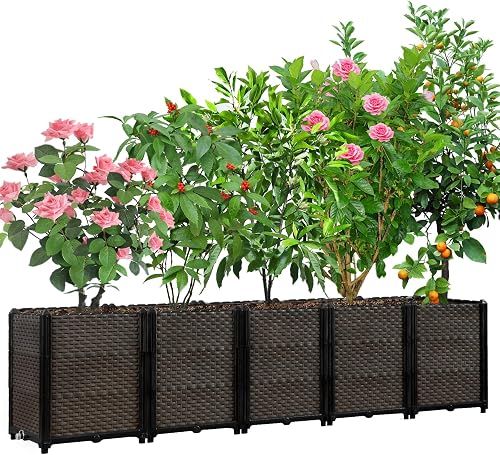
Best overall: the Large Raised Planter Box Outdoor Self Watering, around $114, is our first choice from the table.
Best value: the Window Planter Box, around $55, is the lowest priced of these three.
Also great: the 2PC Railing Planter for Outdoor Plants 36 Inch Metal, around $110, is another strong option with a different set of features.
Unlike a concrete patio, a wood or composite deck distributes weight through individual boards supported by joists spaced at intervals, so a single very heavy planter concentrates load differently than the same weight spread across several smaller pots. Placing large planters directly over or near joists, rather than in the middle of an unsupported span, reduces flex and stress on the decking over time. Most residential decks handle typical planter loads without issue, but a cluster of large, filled planters in one corner is worth checking against your deck's rated capacity, especially on older or elevated decks.
A planter sitting flush against wood decking traps moisture underneath it, which is exactly the environment that encourages rot, mold, and dark staining over a single season. Pot feet or a raised planter stand that lifts the base even half an inch off the decking allows air to circulate underneath and dramatically reduces trapped moisture. On composite decking, staining is less about rot and more about mineral deposits and tannins leaching from drainage water, which a saucer or drainage tray underneath the planter catches before it reaches the boards.
Drainage holes are still necessary for root health on a deck planter, but the water coming through those holes needs somewhere to go that is not directly onto the deck surface. A built in saucer, a raised drainage grid combined with a catch tray, or a self watering reservoir design all keep excess water contained rather than staining boards below. If a favorite planter has no drainage management built in, setting it on a simple plastic tray or deck specific caddy solves the problem without replacing the pot itself.
Railing planters that clamp or hook over a deck railing free up floor space entirely and work well for herbs, flowers, or trailing plants, but they need hardware rated for the planter's filled weight and a railing that is structurally sound enough to support it. Floor standing planters offer far more soil volume and stability for larger plants but take up usable deck space and need the weight and moisture considerations above addressed directly. Many decks end up using both: railing planters for smaller decorative plants and floor standing planters for anything that needs real root room. Before committing to a railing setup, measure the railing's top width and thickness, since bracket style hangers are usually designed around a fairly narrow range of railing profiles and a mismatch means the planter either will not seat securely or sits at an awkward angle that stresses the hardware over time. This is one reason the best deck planters for railings tend to specify a compatible railing width range clearly rather than claiming to fit anything.
Fiberglass and resin planters are popular for decks because they are lightweight, resist fading, and do not chip or scratch the deck surface the way a rough concrete or stone base can. Wood planters look cohesive next to wood decking but need a liner to keep constant moisture away from both the planter's own wood and the deck beneath it. Metal planters should generally sit on a stand or feet regardless of deck material, since a hot metal base sitting flush against boards accelerates both heat stress on roots and surface wear underneath. Concrete and cast stone planters look substantial on a deck but rank among the heaviest options per square foot of footprint, so they deserve extra scrutiny around joist placement and are usually better suited to ground level patios unless the deck was built to handle significant point loads.
Will planters damage my deck?
They can, primarily through trapped moisture underneath the planter or drainage water staining the boards, both of which are largely preventable with pot feet, a stand, or a drainage tray placed under the planter.
Do deck planters need drainage holes?
Yes, for root health, but that drainage should be managed with a saucer, tray, or reservoir system so the water does not run directly onto the deck surface underneath.
How much weight can a deck hold for planters?
Most residential decks handle normal planter loads without issue, but concentrating several large, filled planters in one unsupported area is worth checking against your deck's specific rated capacity, particularly on older decks.
Are railing planters safe for all deck railings?
Only if the railing is structurally sound and the mounting hardware is rated for the planter's filled weight, so check both the railing's condition and the specific hardware rating before hanging anything heavy.
What is the best material for deck planters?
Lightweight, non staining materials like fiberglass and resin tend to work best on decks since they will not chip or scratch the surface and are easy to lift for cleaning underneath.
Should deck planters sit directly on the deck surface?
No, elevating the planter slightly with pot feet or a stand is a small change that meaningfully reduces trapped moisture, staining, and long term surface damage compared to setting it flush on the boards.
The best deck planters protect the surface underneath them while still giving plants the drainage and root room they need, which means thinking about weight distribution, moisture control, and mounting hardware just as much as style. Get those details right, and container gardening on a deck can look great for years without leaving a mark behind.


Best Plant Fertilizer Spikes

Best Soil Testers for Knowing What Your Garden Actually Needs

Best Ceramic Planters: A Buyer's Guide to Glazed Pots

Best Raised Garden Beds for Vegetables and Flowers

Best Amaryllis Bulb Kits: What to Buy and What to Skip

The Best Gardening Kits for Kids: Buying Guide & Top Picks

Best Garden Tote Bags: Our Top Picks and Buying Tips

Best Bird Feeders: A Buying Guide for Every Backyard